
There's a reason travel editors keep calling Kenya "the original safari." It's the place where the whole idea of watching wildlife from a vehicle, on their terms, in their landscape, began. But reduce Kenya to lions and grasslands and you miss half the country: a 536-kilometre coastline of coral reefs and Swahili towns, a jagged equatorial mountain with real glaciers, and a northern desert lake so remote that early explorers called it the Jade Sea.
This guide walks through the 20 places worth building a 2026 Kenya itinerary around - grouped by safari country, the coast, the highlands, and the places most visitors never hear about. Every entry includes what it actually costs, when to go, and how to get there, because a "top places" list that skips logistics isn't much use to anyone booking a real trip.
Quick Summary Box
- Best overall safari base: Maasai Mara National Reserve - the Great Migration crosses the Mara River roughly July through October
- Best beach base: Diani Beach - reef-protected, family-friendly, and well set up for water sports
- Best hidden gem: Chyulu Hills National Park - Hemingway's "Green Hills of Africa," minutes from Amboseli
- Best short escape from Nairobi: Lake Naivasha & Hell's Gate National Park - under two hours by road
- Entry requirement: Almost all foreign nationals need an approved Kenya Electronic Travel Authorization (Kenya eTA) before departure - it cannot be obtained on arrival
- Currency: Kenyan Shilling (KES); roughly 1 USD ≈ KES 129 as of late July 2026, though rates move daily - always check a live rate before budgeting
- Please verify the latest park fees, festival dates, and entry rules from the official Kenya Wildlife Service and Kenya Immigration websites before finalizing your trip.
How This List Was Built
This guide draws on Kenya Wildlife Service fee schedules, the Kenya Tourism Board's official Magical Kenya destination guides, and on-the-ground reporting from Kenya-based tour operators, cross-checked against multiple 2026 sources. Where fees or festival details vary between sources - which happens often in Kenya, since county-run reserves like the Maasai Mara set their own pricing separately from KWS-run parks - this guide flags the discrepancy rather than guessing. Please verify the latest details from the official websites before planning your trip.
Safari Country: The Parks and Reserves
1. Maasai Mara National Reserve
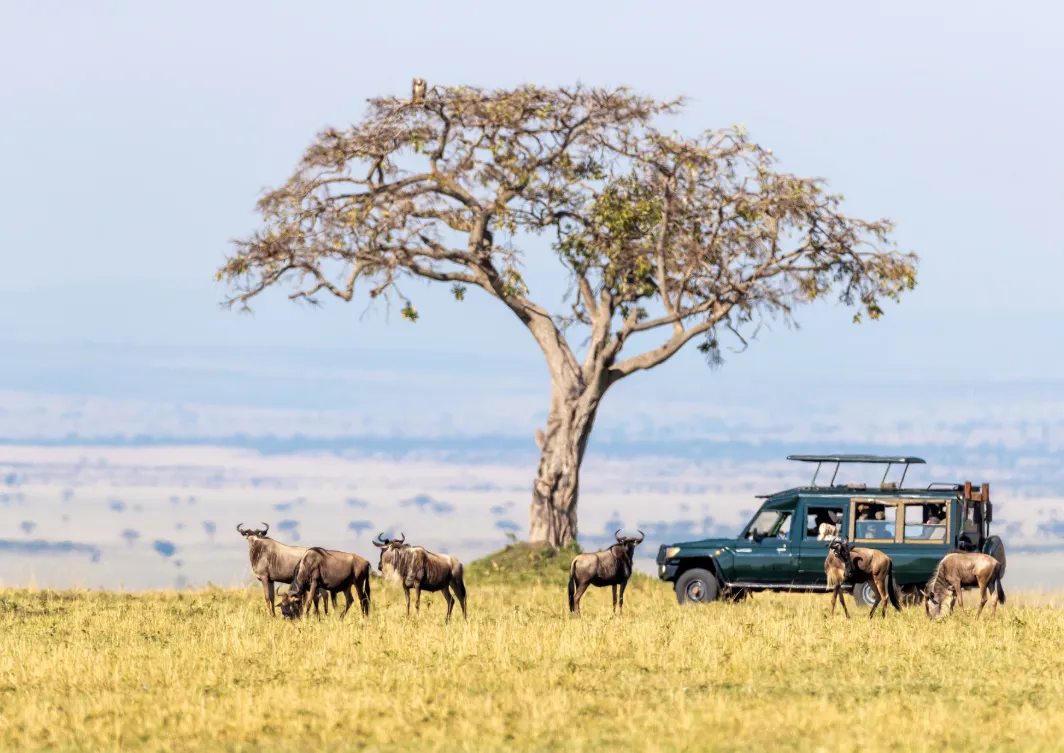
The Mara is Kenya's headline act, and it earns the billing. Rolling savannah, resident lion prides, and the annual spectacle of the Great Migration, when wildebeest and zebra herds cross the crocodile-filled Mara River in their search for fresh grazing. The crossings typically happen anywhere from July through October, though the timing shifts year to year with rainfall.
- Managed by: Narok County Government (not KWS - it uses its own payment system)
- Non-resident entry fee: Roughly $80 in low season, climbing toward $200 in high season for the same gate
- Best time: July–October for the migration; January–March for calving season and thinner crowds
- Nearest airport: Several airstrips inside the reserve (Keekorok, Musiara) served by short flights from Nairobi's Wilson Airport; also reachable by road (roughly 5–6 hours from Nairobi)
2. Amboseli National Park
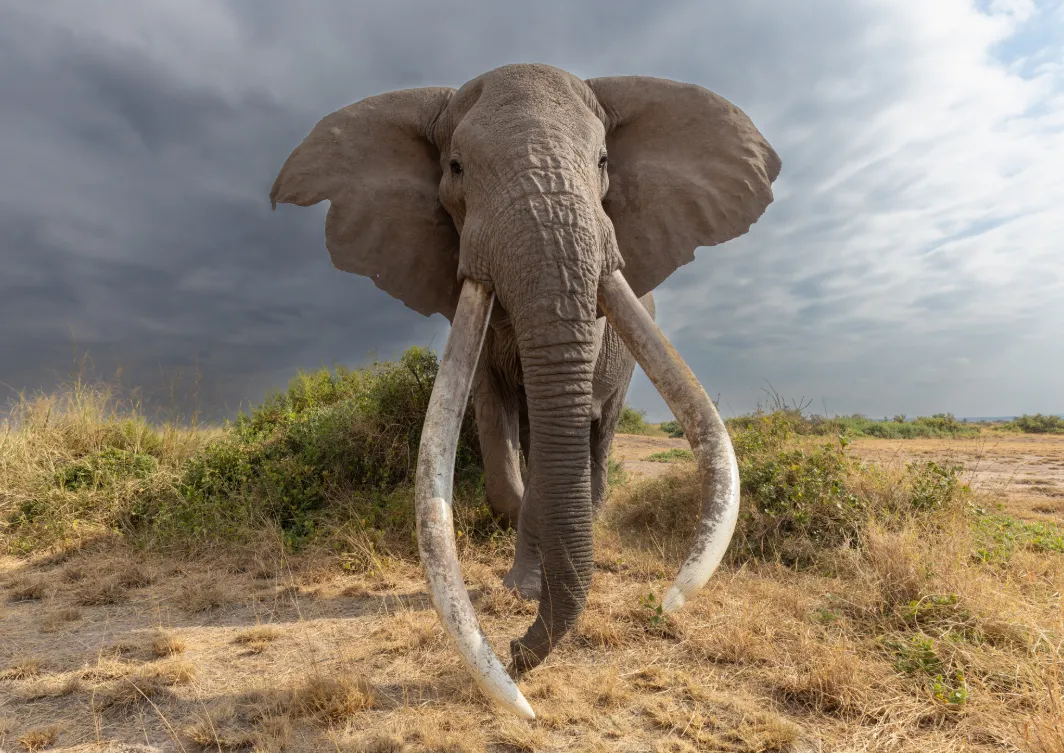
Amboseli's calling card is the postcard shot: elephant herds walking across the plains with Mount Kilimanjaro's snowcap rising behind them across the Tanzanian border. It's one of the most reliable places in Africa to see large, healthy elephant families up close.
- Non-resident entry fee: Around $60–80 per person per day (KWS-managed)
- Best time: June–October and January–February for clear Kilimanjaro views
- Nearest airport: Amboseli Airstrip, with short flights from Nairobi
3. Tsavo East & Tsavo West National Parks
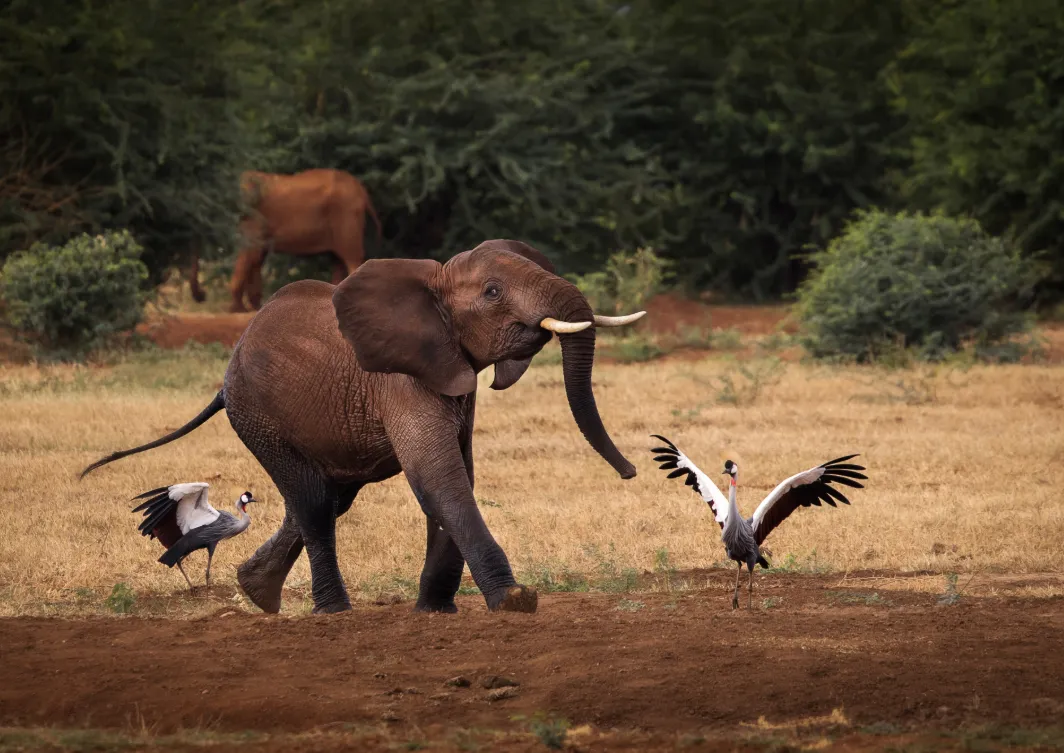
Together, Kenya's largest protected area. Tsavo East is flat, dry, and famous for its red-dust elephants (the color comes from the local soil); Tsavo West is greener and hillier, with the Mzima Springs hippo pools and volcanic Shetani lava flows.
- Non-resident entry fee: Roughly $80–90 per person per day
- Best time: June–October (dry season game viewing)
- Nearest airport: Voi or Mombasa, both within a few hours' drive
4. Lake Nakuru National Park
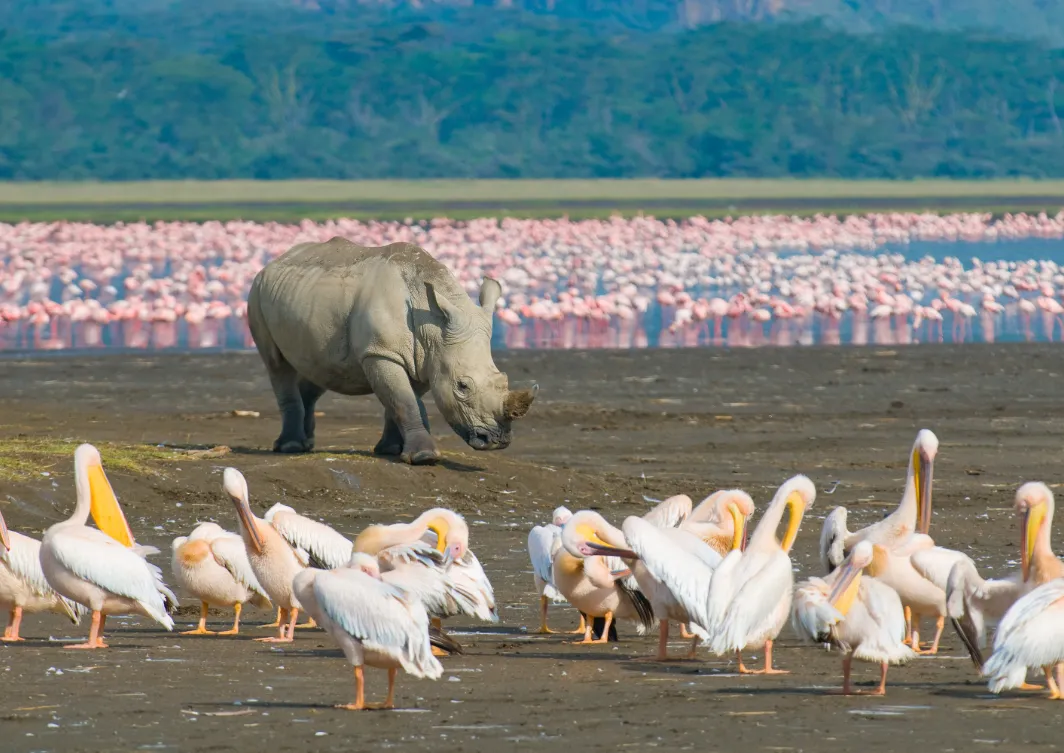
A compact Rift Valley park built around a soda lake once famous for enormous flamingo flocks (numbers fluctuate with water levels). It's also one of the more reliable places to see both black and white rhino in a fenced, protected sanctuary.
- Non-resident entry fee: Around $60–80 per person per day
- Best time: Year-round; drier months (June–September) make roads easier
- Nearest airport: Nakuru or a 2–2.5-hour drive from Nairobi
5. Samburu National Reserve
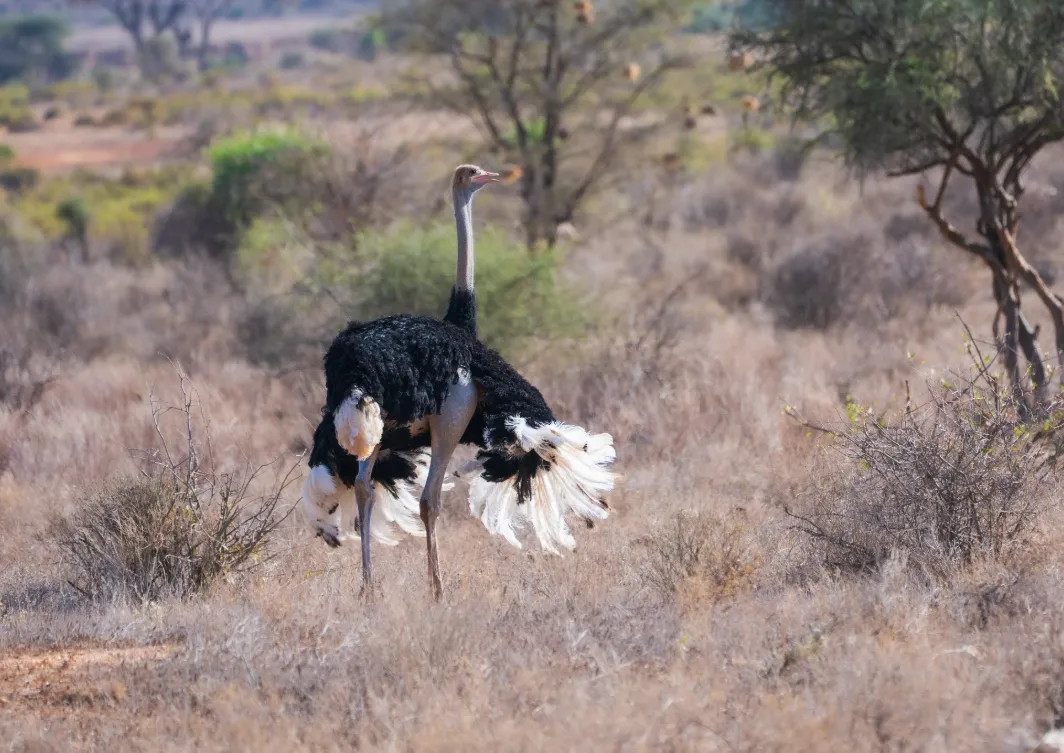
Northern Kenya's arid-country reserve, and a completely different safari from the Mara or Amboseli. This is where you find the "Samburu Special Five" - Grevy's zebra, reticulated giraffe, gerenuk, Somali ostrich, and the beisa oryx - species adapted to semi-desert terrain you won't easily see further south.
- Non-resident entry fee: Around $85 per adult per 24 hours (county-managed)
- Best time: June–October
- Nearest airport: Samburu Airstrip, or a scenic 6-hour drive from Nairobi via Nyahururu
6. Nairobi National Park
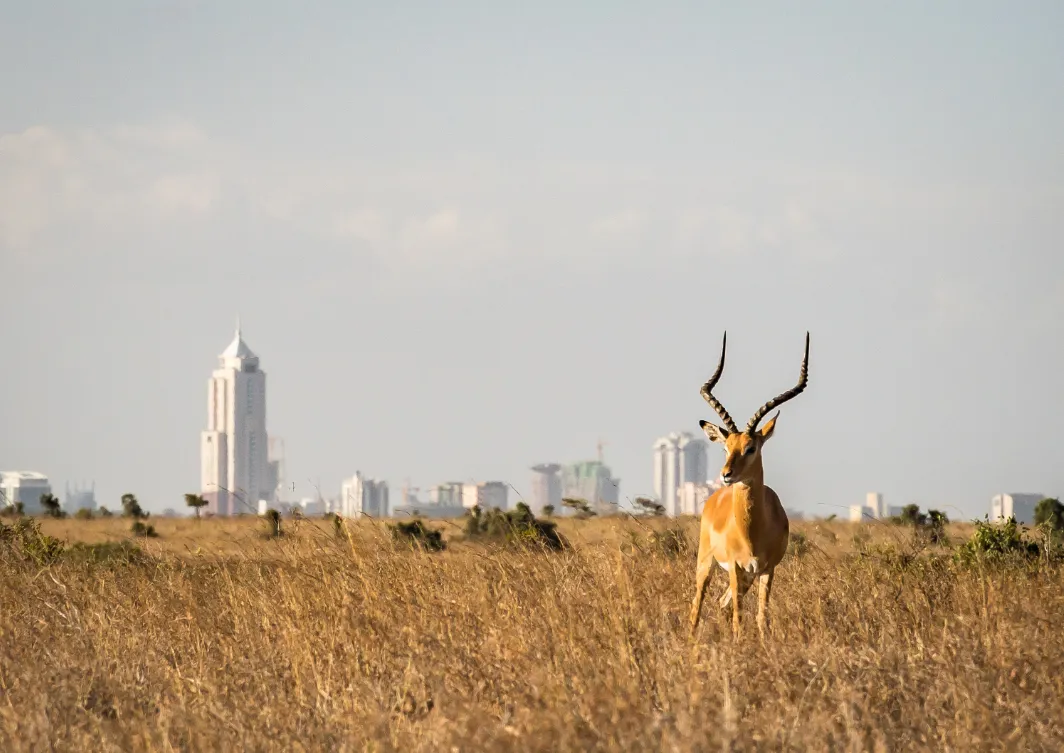
The only national park in the world located inside a capital city, with a skyline of skyscrapers visible behind grazing zebra and the occasional lion. It's the easiest "real safari" for anyone with a short layover in Nairobi.
- Non-resident entry fee: Around $80 per adult (KWS)
- Best time: Year-round; early morning drives before the heat
- Nearest airport: Jomo Kenyatta International Airport (JKIA) - under 30 minutes away
7. Ol Pejeta Conservancy
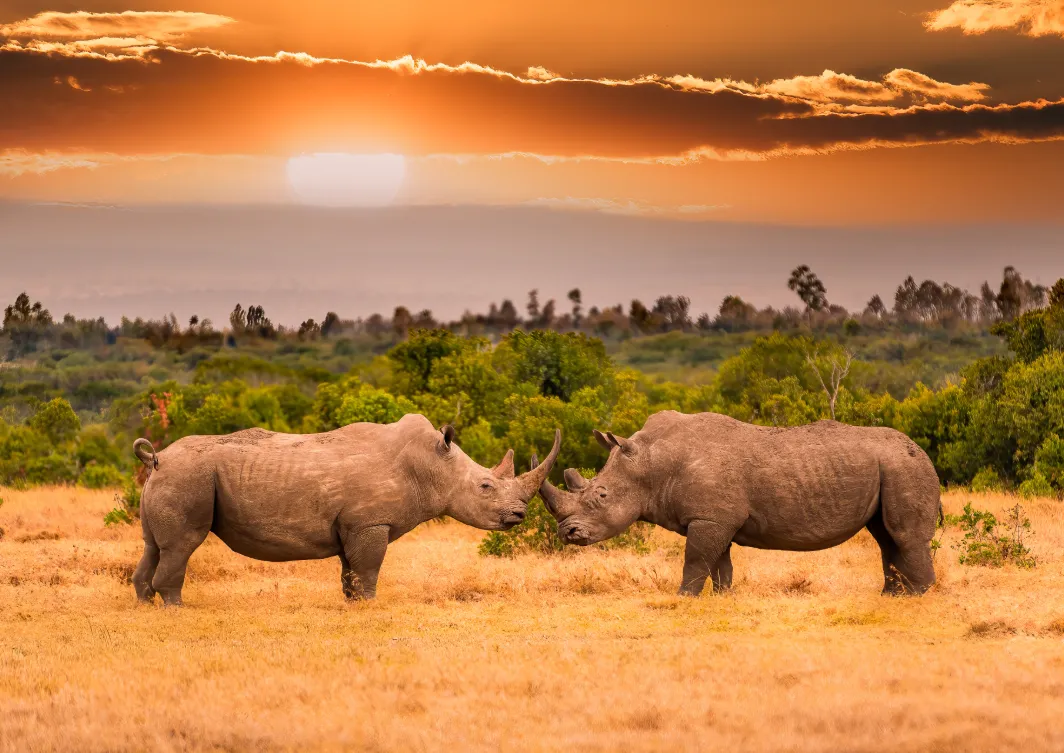
A private, fenced conservancy on the Laikipia Plateau, and the most reliable place in Kenya to see the Big Five plus black rhino in significant numbers. It's also home to the last two northern white rhinos on Earth, Najin and Fatu, under 24-hour protection.
- Entry fee: Separate private conservancy pricing (higher than standard KWS parks; check current rates directly)
- Best time: Year-round
- Nearest airport: Nanyuki, roughly 3.5 hours by road from Nairobi
8. Lake Naivasha & Hell's Gate National Park
A freshwater Rift Valley lake known for hippo pods and prolific birdlife, right next to Hell's Gate - one of the only parks in Kenya where you can cycle or walk among zebra and giraffe without a vehicle. Hell's Gate's dramatic gorge and towers were the visual inspiration for parts of Disney's "The Lion King."
- Non-resident entry fee: Around $30–35 per person per day for Hell's Gate
- Best time: Year-round; a popular weekend trip from Nairobi
- Nearest airport: Nairobi (roughly 1.5–2 hours by road)
The Highlands and the Rift Valley {#highlands-rift-valley}
9. Mount Kenya National Park
Africa's second-highest peak (5,199 metres) and a UNESCO World Heritage Site, ringed by montane forest, moorland, and - increasingly rare at the equator - glaciers. You don't need mountaineering experience to hike the lower routes; reaching the third-highest summit point, Point Lenana, is achievable for reasonably fit trekkers over 3–5 days.
- Non-resident entry fee: Around $60 per person per day
- Best time: January–February and August–September (driest climbing windows)
- Nearest airport: Nanyuki
10. Aberdare National Park
A high-altitude forest range known for dense bamboo, waterfalls, and tree-lodge stays where floodlit waterholes bring elephants and even the occasional leopard right up to your window at night.
- Non-resident entry fee: Around $50–60 per person per day
- Best time: June–September, January–February
- Nearest airport: Nyeri or Nanyuki
11. Great Rift Valley Viewpoints (Mount Longonot & Menengai Crater)
Not a single site but a run of dramatic overlooks along the valley that splits Kenya in two. Mount Longonot is a dormant volcano you can hike to a crater rim in half a day; Menengai Crater near Nakuru is one of the largest calderas in the world and produces genuine geothermal steam.
- Entry fee: Modest KWS fee for Longonot (around $25–30)
- Best time: Year-round; early morning for clearer views
- Nearest airport: Nairobi or Nakuru
The Kenyan Coast
12. Diani Beach
Kenya's best-known beach and consistently ranked among Africa's finest - 17 kilometres of white sand, a reef-protected lagoon, and the widest range of resorts, water sports, and restaurants on the coast. It's the easiest coastal base for families and first-time beach visitors.
- Getting there: Moi International Airport (Mombasa), then roughly 45 minutes by road/ferry
- Best time: December–March and July–October (driest, calmest seas)
13. Watamu Marine National Park
A quieter, more nature-focused alternative to Diani. Watamu's protected reef is one of the best snorkeling and diving spots on the East African coast, and it's also a major sea turtle conservation site with community-run programs visitors can join.
- Getting there: Malindi Airport, roughly 25 minutes away
- Best time: October–March for the clearest water
14. Malindi & the Gede Ruins
Malindi mixes beach time with genuine history: the Vasco da Gama Pillar, one of the oldest European monuments in Africa, and the atmospheric Gede Ruins - an abandoned 13th-century Swahili city swallowed by coastal forest.
- Getting there: Malindi Airport
- Best time: Year-round; avoid the long rains in April–May
15. Lamu Old Town
A UNESCO World Heritage Site and the oldest continuously inhabited Swahili settlement in East Africa. No cars are allowed - transport is by donkey, handcart, or traditional dhow - and the carved wooden doors and coral-stone architecture date back centuries.
- Getting there: Manda Airport, then a short boat transfer
- Best time: Year-round; the Lamu Cultural Festival (see our Kenya Events Calendar 2026) adds a cultural layer in late November
16. Mombasa & Fort Jesus
Kenya's second city and the historic gateway between safari country and the coast. Fort Jesus, a 16th-century Portuguese fortress, is also a UNESCO World Heritage Site, and the surrounding Old Town's spice markets are worth a half-day even if you're basing yourself elsewhere on the coast.
- Getting there: Moi International Airport
- Best time: Year-round as a day-trip or transit stop rather than a beach base
Hidden Gems Off the Tourist Trail
17. Chyulu Hills National Park
Ernest Hemingway called this range of young volcanic hills between Amboseli and Tsavo the "Green Hills of Africa," and it remains one of Kenya's least-visited parks despite sitting right in the middle of the safari circuit. Expect rolling grassland, lava-tube caves, and open views of Kilimanjaro with none of the vehicle traffic of its famous neighbors.
- Best time: June–October
- Getting there: Combined easily with an Amboseli or Tsavo itinerary
18. Kakamega Forest
Kenya's only true tropical rainforest, tucked in the west near the Ugandan border, with an ecology that has more in common with Congo Basin forests than anything found on a typical Kenya safari. Over 400 recorded bird species, plus primates like the De Brazza's monkey.
- Best time: June–September and December–February (drier trail conditions)
- Getting there: Kisumu, then roughly 1–1.5 hours by road
19. Lake Turkana
The world's largest permanent desert lake, and a UNESCO World Heritage Site for its role in early human fossil discoveries at Koobi Fora. Its jade-green water against the arid, volcanic landscape is one of the starkest, most unusual sights in East Africa. This is a genuine expedition destination, not a casual add-on - plan for rough roads and basic infrastructure.
- Best time: June–September, avoiding peak heat
- Getting there: Fly to Lodwar, or overland via Marsabit (long drive; a 4x4 and an experienced guide are strongly recommended)
20. Kisumu & Lake Victoria
Kenya's third-largest city sits on the shore of Africa's largest lake, offering a laid-back mix of tilapia-fresh cuisine, boat trips to Ndere Island, and a genuinely different pace from both the safari circuit and the coast.
- Best time: Year-round
- Getting there: Kisumu International Airport, with direct domestic flights from Nairobi
Best Time to Visit Kenya
| Season | Months | What to Expect |
|---|---|---|
| Dry / High Season | June–October | Best game viewing, Great Migration river crossings, higher park fees and prices |
| Short Dry Spell | January–February | Good visibility, warm weather, wildebeest calving in the Mara |
| Long Rains | March–May | Lush landscapes, fewer tourists, lower prices, but some roads become difficult |
| Short Rains | November–mid December | Green scenery returns, good value, migratory birds arrive |
Coastal weather runs on its own rhythm: the Kaskazi winds (December–March) bring calmer seas and clearer water, while the Kusi winds (June–September) can push seaweed onto some beaches, particularly Diani and Lamu.
Costs, Currency & Entry Fees
Kenya's national parks use a mix of pricing systems, and this trips up more travelers than almost anything else in trip planning:
- KWS-managed parks (Amboseli, Tsavo, Nakuru, Nairobi National Park, Aberdare) pay through the official KWS eCitizen portal, and non-resident adult fees generally run $60–90 per person per day.
- County-managed reserves (Maasai Mara under Narok County, Samburu under Samburu County) use separate payment systems and separate fee scales - the Mara alone can range from roughly $80 in low season to $200 in high season.
- Private conservancies (Ol Pejeta, Lewa) set their own rates entirely.
Fees are revised periodically, so treat every number above as a planning estimate. Please verify current rates on the official KWS eCitizen portal or with your safari operator before budgeting.
As of late July 2026, 1 US dollar ≈ KES 129, though the shilling moves daily - check a live converter before you travel, and note that Kenya's newest banknotes feature the "Big Five" animals.
Getting Around Kenya
- Domestic flights: The fastest way to string together Nairobi, the Mara, Amboseli, and the coast - most safari airstrips are served by small charter and scheduled operators from Wilson Airport.
- Self-drive: Possible and popular for parks close to Nairobi (Naivasha, Nakuru, Hell's Gate), but the Mara and remote northern reserves are better left to experienced 4x4 drivers or guided transfers.
- Matatus (shared minibuses): Cheap and widely used by locals between towns, though not the most comfortable option for long-distance tourist travel.
- Useful apps: Uber and the local ride-hailing app Little Cab both work well in Nairobi and Mombasa; maps.me or offline Google Maps downloads help outside major towns where signal is patchy.
Kenya eTA: What You Need Before You Fly
Since the Government of Kenya replaced the old eVisa system with the Electronic Travel Authorization (eTA), every non-exempt visitor - including infants - needs an approved eTA before boarding their flight. It cannot be obtained on arrival, and airlines are required to deny boarding without one.
A few essentials:
- Tourist eTA: Standard 90-day single-entry authorization for holidays and safaris
- Multiple Entry eTA: Valid for 1 year (5 years for US passport holders), 90 days per visit
- Transit eTA: For layovers under 24 hours; no accommodation proof required
- Exempt travelers: Kenyan citizens, EAC partner-state citizens, and holders of valid Kenyan residence permits
Because most of the destinations on this list - Amboseli, the Mara, the coast - sit hours from the nearest immigration office, it's worth getting the eTA sorted, document-checked, and printed well before departure rather than trying to fix an error mid-trip. VistoRoute's Kenya eTA guide walks through eligibility, required documents, and processing speeds if you want the full breakdown, and the team is available through our contact page if you run into a document question while applying.
Safety, Etiquette & Practical Tips
- Yellow fever: Carry a vaccination certificate if you're arriving from or transiting through a country on Kenya's endemic list.
- Malaria: Most safari and coastal regions are malaria zones; talk to a travel clinic about prophylaxis before you go.
- Wildlife safety: Stay inside vehicles in national parks unless a licensed guide says otherwise, and never approach animals on foot without a ranger.
- Local etiquette: A simple "Habari" (how are you) or "Asante" (thank you) in Swahili goes a long way. Ask before photographing people, especially in Maasai, Samburu, or Turkana communities, and expect a small fee is sometimes customary for posed photos at cultural visits.
- Plastic bags: Kenya has banned single-use plastic bags since 2017, and national parks are plastic-free zones - pack reusable bottles and bags.
- Emergency numbers: 999 or 112 for police, ambulance, and fire services nationwide.
- SIM cards: Safaricom and Airtel both sell tourist SIMs at the airport; Safaricom's network has the widest rural coverage, useful if you're heading to remote parks.
Packing List for Kenya
- Neutral-colored safari clothing (khaki, olive, brown - avoid bright white and dark blue/black, which attract tsetse flies in some parks)
- A warm layer for early-morning game drives, even near the equator
- Broad-spectrum sunscreen and insect repellent
- Binoculars (most lodges have some, but your own are worth it)
- A universal power adapter (Kenya uses UK-style Type G plugs)
- Lightweight, breathable clothing plus a swimsuit for the coast
- A reusable water bottle
Family, Solo, Budget & Luxury Tips {#traveler-tips}
- Family travelers: Nairobi National Park, Lake Naivasha, and Diani Beach are the easiest combinations - short transfers, kid-friendly activities like the Giraffe Centre and David Sheldrick Wildlife Trust, and fewer long game-drive days.
- Solo travelers: Join scheduled group safaris rather than private ones to cut costs, and consider Nairobi or Diani as social, well-connected bases.
- Budget travelers: Long rains season (March–May) brings lower lodge rates and thinner crowds; self-driving to Rift Valley parks near Nairobi also cuts out costly charter flights.
- Luxury travelers: Private conservancies like Ol Pejeta and Laikipia offer exclusive-use lodges, walking safaris, and night drives not permitted in public parks.
Travel Checklist
- Approved Kenya eTA printed and saved digitally
- Passport valid 6+ months beyond arrival date, with a blank page for stamps
- Yellow fever certificate (if applicable)
- Travel insurance covering medical evacuation
- Park fees pre-paid or budgeted through KWS eCitizen / county portals
- Domestic flights or transfers booked between regions
- Malaria prophylaxis discussed with a travel clinic
- Local SIM or international roaming plan arranged
FAQs
- What are the top places to visit in Kenya in 2026? The Maasai Mara, Amboseli, Diani Beach, Lamu Island, and Lake Nakuru consistently rank as the most-visited, alongside emerging favorites like Chyulu Hills and Samburu.
2. Do I need a visa to visit Kenya?
Most foreign nationals need an approved Kenya eTA rather than a traditional visa; check the eligible countries list before applying.
3. How many days do I need in Kenya?
7–10 days allows a comfortable combination of one or two safari parks plus a few coastal days; 4–5 days is workable for a single-region trip.
4. Is Kenya safe for tourists?
The main tourist circuits - the Mara, Amboseli, Diani, Nairobi's tourist areas - see millions of visitors yearly with standard travel precautions in place; follow your guide's advice in parks and use registered operators.
5. What is the best month to see the Great Migration?
River crossings in the Maasai Mara most often happen between July and October, though exact timing shifts with rainfall each year.
6. Can I visit the Maasai Mara and the coast in one trip?
Yes - most itineraries fly between Nairobi's Wilson Airport, the Mara, and Mombasa or Diani, making a combined safari-and-beach trip straightforward.
7. Are Kenya's national parks expensive?
Non-resident park fees typically run $60–90 per day at KWS parks and higher at the Maasai Mara; conservancies and private reserves set their own rates.
8. What currency should I use in Kenya?
The Kenyan Shilling (KES) is the local currency; US dollars are accepted for some park fees and safari packages, but shillings are needed for everyday spending.
9. Is Nairobi worth visiting, or just a stopover?
Nairobi National Park, the Giraffe Centre, and the David Sheldrick Wildlife Trust make Nairobi worth at least a day beyond a simple airport transfer.
10. What's the best beach in Kenya for families?
Diani Beach, thanks to its calm reef-protected lagoon, wide range of family resorts, and easy access from Mombasa's airport.
11. Is Lake Turkana worth the trip?
Yes, for travelers seeking a genuine off-the-grid experience - but it requires more planning, a 4x4, and tolerance for basic infrastructure than any other destination on this list.
12. Do I need a 4x4 to self-drive in Kenya?
For Rift Valley parks near Nairobi (Naivasha, Nakuru, Hell's Gate), a standard vehicle can work in dry conditions; for the Mara, northern reserves, and Turkana, a 4x4 is strongly recommended.
13. What vaccinations do I need for Kenya?
Yellow fever is required if arriving from an endemic country; hepatitis A, typhoid, and malaria prophylaxis are commonly recommended - consult a travel clinic for personalized advice.
14. Can children get a Kenya eTA?
Yes - every individual traveler, including infants, needs their own approved eTA; children cannot travel under a parent's authorization.
15. What language is spoken in Kenya?
English and Swahili are both official languages; Swahili phrases are widely appreciated by locals even in tourist areas.
16. Is it customary to tip safari guides in Kenya?
Tipping guides, drivers, and camp staff is customary and generally expected; many lodges post suggested daily amounts.
17. What's the rainy season like in Kenya?
The long rains (March–May) and short rains (November–mid December) bring afternoon showers rather than all-day downpours in most regions, and wildlife viewing remains possible.
18. Are there hidden gems near the Maasai Mara?
The Chyulu Hills and Loita Hills areas offer quieter alternatives within reach of the main Amboseli–Mara circuit.
19. What's the best way to book Kenya safari accommodations?
Book well ahead for July–October high season, especially for tented camps inside the Mara and Amboseli, which sell out months in advance.
20. How do I check my Kenya eTA status before departure?
Through your registered email updates or the official application portal's status tracker; VistoRoute applicants can also reach the support team via the contact page.
This is a sensitive area of travel logistics that can change with government policy - if any fee, festival date, or entry rule above has shifted since publication, please verify against the official source linked in the References section.
Final Word
Twenty places is a lot of ground, and no one trip covers all of it. Pick one safari anchor, one coastal stretch, and - if you have the extra days - one hidden gem that most visitors skip. That's usually the combination people remember years later, not the checklist. Whichever route you choose, sort your Kenya eTA early: it's the one piece of paperwork that can quietly derail an otherwise perfect itinerary if it's left to the last minute.
Ready to lock in your travel dates? Check your Kenya eTA eligibility and apply with expert document review through VistoRoute →
This is one of the most detailed Kenya travel guides I've read. The recommendations cover both famous attractions and practical travel tips, making it very useful for anyone planning a trip in 2026. Great work!
Great list of destinations. I’ve added several of these places to my Kenya travel itinerary.