
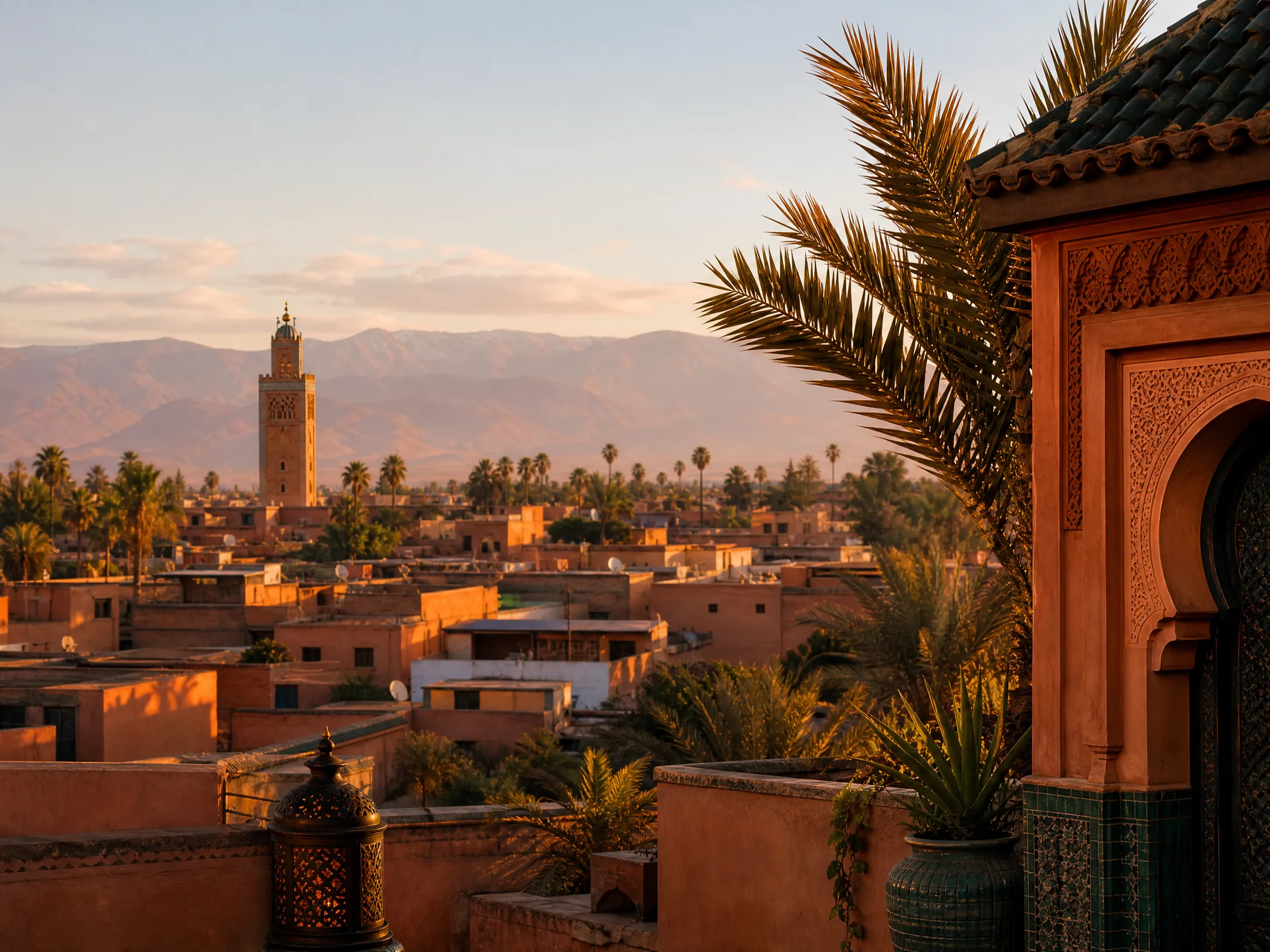
Morocco saves you an argument. Travellers agree on the shortlist here - which, having spent weeks arguing about shortlists for other countries, still surprises me. The debate isn't which places matter. It's what to drop, because twelve days covers it without ever driving eight hours on back-to-back days.
Three logistics facts frame everything. One: Merzouga is 560km from Marrakech, mostly mountain road, so the desert is an overnight affair, full stop. Two: the fast train eats Casablanca-Tangier in two hours. Three: Chefchaouen sits awkwardly off any natural route, which is why lazy itineraries skip it and why people who go never forget it.
The shortlist at a glance
| Place | Best for | Days | Best season |
|---|---|---|---|
| Marrakech | First visit, souks, food | 3-4 | Mar-May, Oct-Nov |
| Fez | History, crafts | 2-3 | Mar-May, Oct-Nov |
| Sahara (Merzouga) | Dunes, camel trek | 2 nights | Oct-Apr |
| Chefchaouen | Photos, slow days | 1-2 | Apr-Jun, Sep |
| Essaouira | Sea, wind, seafood | 2 | Year-round |
| Rabat | A calm capital | 1 | Year-round |
| Ait Ben Haddou | Film sets, ksar walls | Half day | Mar-May, Sep-Nov |
| Casablanca | Hassan II Mosque | 1 | Year-round |
| Dades & Todra Gorges | Road trip, hikes | 2 nights | Apr-May, Sep-Oct |
| Agadir & Taghazout | Beach, surf | 3-4 | Oct-Apr or Jun-Aug |
1. Marrakech - the loud, lasting heart of Morocco
Marrakech first, and no, there's no alternative opening act. Somewhere near two billion dirhams of tourist money lands here yearly, and still the thing people email me about is free: a riad rooftop, 7pm, watching Jemaa el-Fna turn from juice carts into a din of drummers, grill smoke and storytellers. Do the tourist sites in the cool window - Bahia Palace at 9am beats the buses, and the seventy-dirham Saadian Tombs stay fifteen degrees cooler than the street above them.
Souk prices are theatre, and enjoying that matters. The seller opens at double. You offer a third. Ritual insults, laughter, and somewhere in there a real number appears. The Jardin Majorelle costs about 130 dirhams; the blue is so specific that Yves Saint Laurent ended up buying the entire garden. Take the 10am entry, not noon - the light photographs better and the paths aren't cooked.
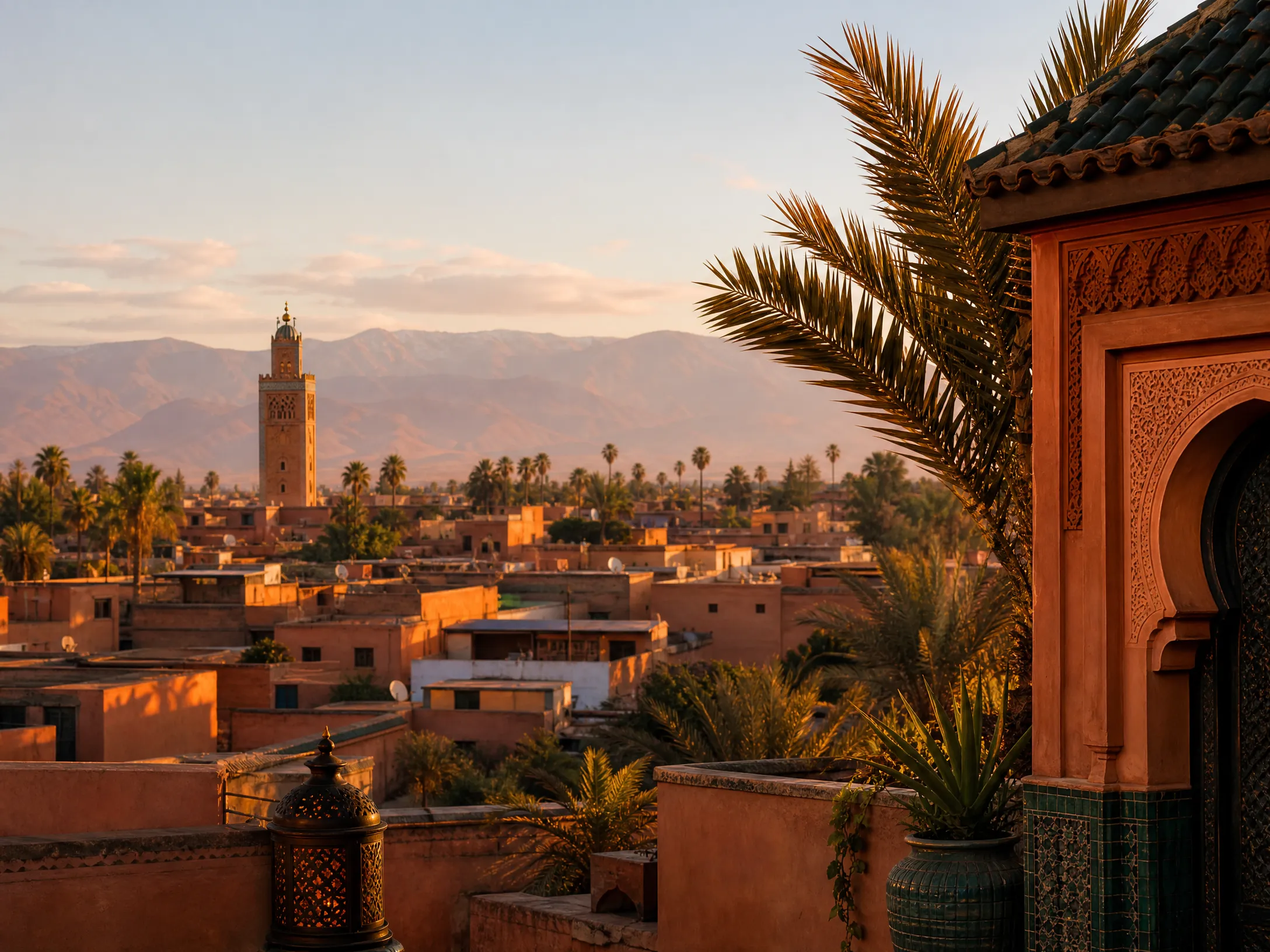
Stay inside the medina. Gueliz, the new town, has wine bars and valet parking; it also has no soul, and the medina mornings - the call to prayer, msemen and honey from the rooftop, shopkeepers unlocking shutters by hand - are half the reason people come back.
2. Fez - the medina time forgot
Right, Fez. Nine thousand lanes, and the number isn't marketing - urban historians have actually counted. Your GPS will have you walking in circles within minutes; every travel forum says so because it keeps being true. Buy the half-day licensed guide. Three hundred dirhams, and the cheapest sanity purchase of the whole trip. Worth it mostly for the Chouara tanneries: stone vats of white limewater, then poppy red and saffron yellow, men wading bare-legged in them exactly as their grandfathers did. Go in the morning while the pits are working. Yes, the smell is famous. Famous because it's real - they hand you a sprig of mint at the door and you'll still wish you'd brought a second one.
Al-Qaraouiyine started teaching in 859, which predates most European universities by centuries, and still runs. You can't enter the prayer hall unless you're Muslim - fair enough - but the library courtyard is open and gorgeous. Two days covers Fez. Add a third if you day-trip to Volubilis: Roman mosaics lying in open fields half an hour north, usually with a cat sprawled across them. Meknes sits nearby too, if imperial gates are your thing. They should be, briefly.
3. Merzouga and the Erg Chebbi dunes
The desert, then: Merzouga and Erg Chebbi. Twenty kilometres of dunes along the Algerian border, cresting near 150 metres, which sounds modest right up until you're three-quarters up one at 5:45am with sand in your shoes. Camel in at dusk. Dinner, drums, and - depending on what you paid - either a floor mat or an en-suite bed beneath a sky so crowded it silhouettes the ridge lines.
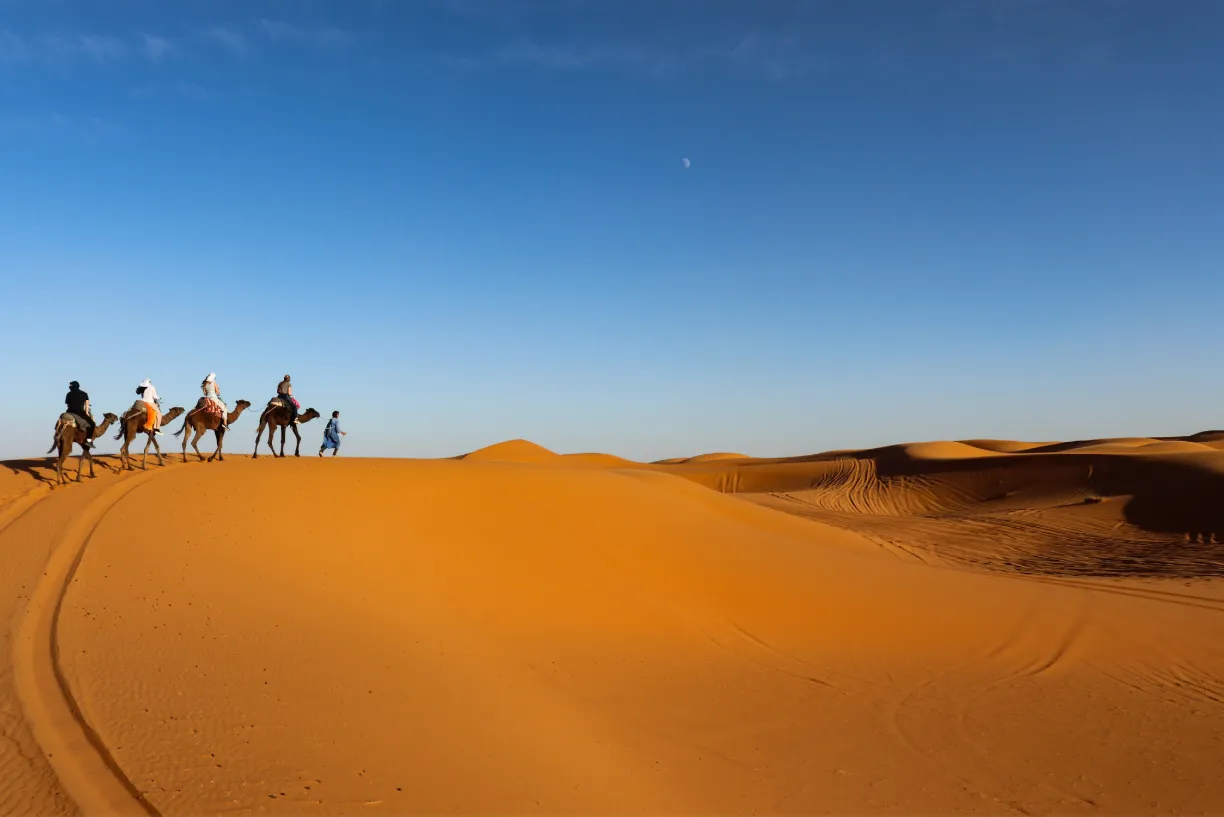
Camp pricing, roughly: a thousand dirhams buys mattress-and-shared-toilet; two thousand buys private tent, real bed, and camps that have added plunge pools you soak in while the stars do their thing. July is the no. Ground temperature crosses 50C. The desert belongs to October through April, and a two-night booking beats one night in every review I've read and every campfire conversation I've had.
4. Chefchaouen - the blue town that photographs itself
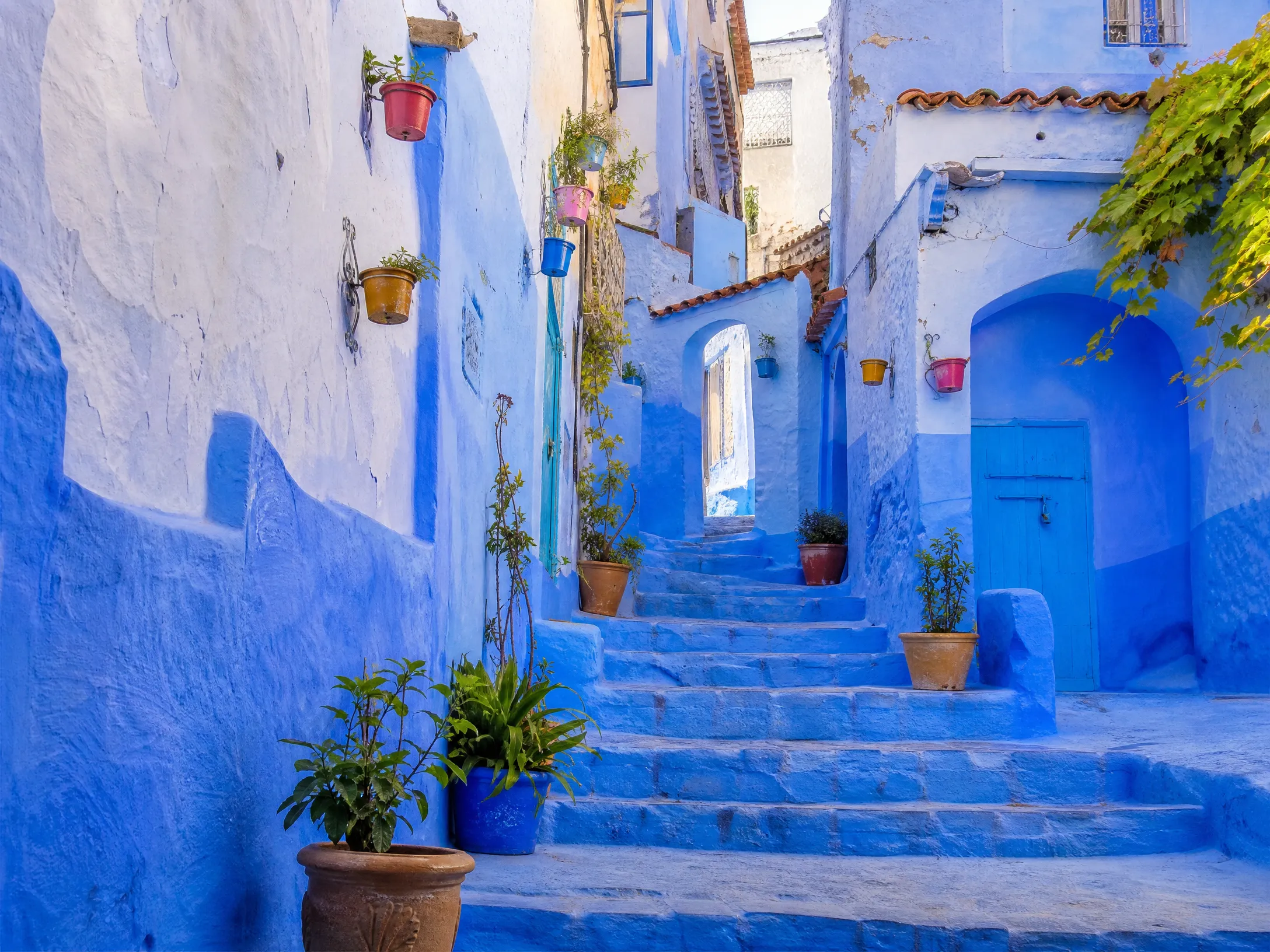
Chefchaouen next. Blue - not paint-bucket blue, a powder blue that changes with the hour. Walls, steps, doors, pot plants; once, famously, somebody's dog. The whole medina spans two kilometres, so an afternoon does it - but stay the night, because the experience worth having is 7:30am with no day-trippers, and the evening walk to the roofless Spanish Mosque: twenty minutes uphill, and the blue grid laid out beneath you against the Rif mountains.
5. Essaouira - Atlantic wind and seafood royalty
Essaouira changes the weather before you've parked. Ten degrees gone, wind up, and Marrakech urgency switches off with the ignition. A town built white, edged blue, ringed by 18th-century ramparts with cannons still pointed out to sea. Walk the full circle of those walls - free, twenty minutes, worth it twice. The port gets going before dawn: blue boats in, sardines out, and by noon half the day's catch is on a grill counter by the water. Point at a fish, agree a price, sit down. That's lunch royalty for pocket change.
Gnawa music came up through these exact streets - the three-string hajhuj bass, metal qraqeb castanets clacking through trance cycles all night. Catch it in a small venue, not a festival stage; the volume matters less than the crowd singing every verse back. Then there's the wind, always the wind. It made this coast the Atlantic's kite and windsurf school. July blows hardest - kites standing still in the air look fake. September is the swimmer's month. Or plan nothing at all and spend six days eating grilled sardines; roughly one traveller in five does exactly that and nobody has ever reported a regret.
6. Rabat - the capital everyone skips
Rabat barely registers on itineraries, strange for a capital that keeps itself this neat. Give it half a day off the train. Oudaias Kasbah first: blue-and-white lanes folded inside an old fortress, teenagers playing football whenever you're not looking. Hassan Tower next - meant to be the biggest minaret in the Islamic world back in 1195, abandoned at 44 metres when the treasury ran dry, and better company at this size, honestly. Finish at Chellah, a Roman site turned royal necropolis where storks have nested on the walls for so long that nobody bothers dating them any more.
7. Ait Ben Haddou and the film road south
Now for the drive everyone photographs. Tizi n'Tichka climbs the High Atlas, 2,260 metres up, and leans the road back on itself thirty-odd times. Bus drivers sleep through these curves. Nobody else should try. Across the far side: Ait Ben Haddou. Mud brick from the 11th century. Ten families, give or take, still living between those walls - the same walls Gladiator rented, plus the Game of Thrones crew, plus a queue of lesser desert blockbusters. Entry: a hundred dirhams. Arrive for the last hour of light and the walls go copper. The film-studio complex at Ouarzazate sits twenty minutes further for the truly curious.
8. Casablanca - one day, one mosque
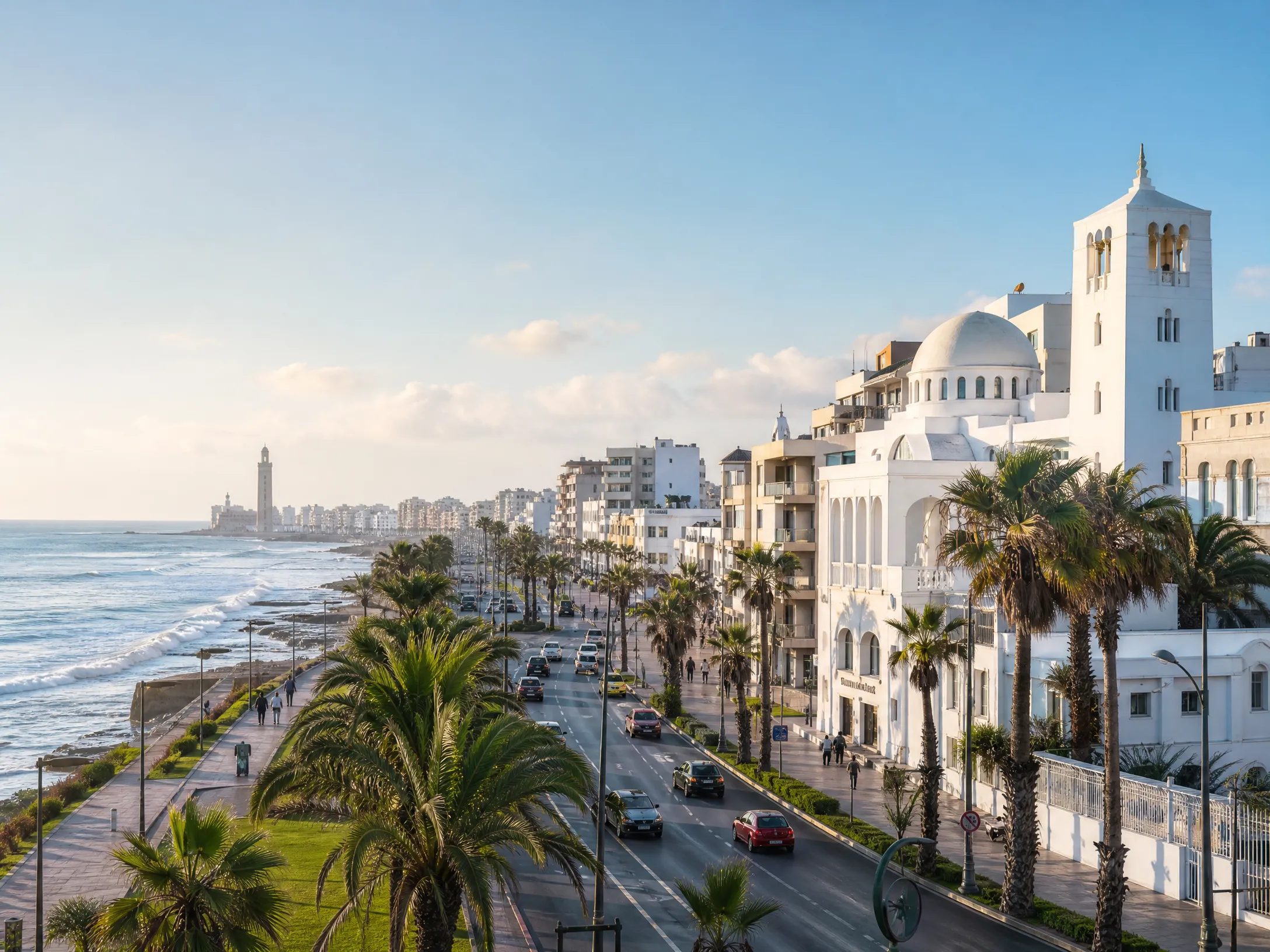
Casablanca. One day here is plenty, and I'll defend that to argument. This is a working city - ports, banks, commuter flights - untouched by any urge to entertain visitors, and after a straight week of medinas that indifference feels merciful. There's exactly one necessary stop: Hassan II Mosque. Twenty-five thousand worshippers inside, a 210-metre minaret, and the western half balanced on poured rock above the ocean. Visitors can join the guided tour for roughly 130 dirhams - almost no other mosque in Morocco allows it. Do that, walk the corniche, move on.
9. Dades and Todra Gorges - the road trip stretch
Dades and Todra are the drives people retell. Dades Gorge tucks the road between 300-metre walls and then climbs a stack of hairpins photographers get up early for. Ninety minutes east, Todra's canyon narrows to twenty metres and you park right inside it, engine off, and walk. Between them: palm oases, broken kasbahs, rose ditches in May. Sleep here on the desert run - the gorge guesthouses are part of the pleasure.
10. Agadir and Taghazout - surf, sun, nothing heavy
Agadir divides crowds and always will. The 1960 earthquake erased the old town, and the replacement is honest resort: a long beach promenade, wide streets, hotels in a row. Twenty minutes north, Taghazout stacks itself round Anchor Point, a long right-hander that professionals still warm up on every winter. Beginners get absorbed by the surf schools, wetsuits included, and inland waits Paradise Valley - a spring gorge with a leap rock that costs nerve, not money.
Surf window: October through April. Beach family season: July and August, when the Taghazout wind drops to a stroll. Pick your tribe and book to it.
How many of these fit in one trip?
Ratios save trips, so here are two that work. Twelve days: three Marrakech, three road-and-dunes, three Fez, two Chefchaouen, out via Tangier or Casablanca. Seven days: Marrakech, Ait Ben Haddou, the desert, one coastal day - and nothing else, no matter what the map hints. Marrakech airport gets fed by budget routes year-round; start the search there.
One admin step before you book anything
Entry rules come first. Passport-dependent: visa-free, an online Morocco tourist eVisa, or a consulate appointment - the visa-exempt list answers it in half a minute. The eVisa itself is minutes-long on the official portal, the eVisa overview covers requirements, and this site's 3-step application walkthrough handles every field.
Frequently asked questions
Which place matters most?
Marrakech, first trip, and it isn't close. What separates the trips people rave about later is the quiet bolted on afterwards - slow Chefchaouen mornings, an Essaouira afternoon where the wind is louder than the traffic. Four straight days of square noise is the rookie mistake. Everyone buys that ticket once.
How many days do you need for Morocco?
Twelve days. Seven is doable if the list gets shorter, and four buys you Marrakech plus one frantic desert overnight - which means hours in a minibus for a single dinner among dunes. Beyond two weeks, people start manufacturing reasons to add coastal towns. Resist.
Which month is best for visiting Morocco?
April through May, or October. Marrakech holds the mid-20s, the desert stops cooking people, the coast behaves itself. Ramadan moves eleven days earlier each year, so 2026's falls across late February into March. Expect slow days, festive nights and shut lunch counters in the small towns.
Is Morocco safe for tourists?
Yes, with plain city sense. What actually greets you isn't danger but friction: unofficial guides, meter-free taxis, a stranger with a cousin's shop two lanes over. Say no thanks and keep walking - that's the full briefing. Solo women report more attention in Marrakech than anywhere else on this list; the northern and coastal towns sit quieter.
Can the Sahara dunes be a day trip?
It can't be done. Every true dune field sits seven to nine road hours away, minimum. One overnight is the floor; two gets you out of bed before dawn for the dune climb, and that's the photograph nobody deletes.
Which Moroccan city has the best food?
Fez, by a nose - the pastilla makes the argument on its own. Marrakech answers with variety and the grilled stalls that line the square after dark; eat wherever the local queue is longest. Essaouira does seafood. Rabat serves the cheapest good lunch in the country.
Do I need a guide for the Fez medina?
Once, for half a day, booked before you arrive. Three hundred dirhams buys you straight through the maze and into the tanneries with the context intact. After that, being lost alone becomes the best game in Fez. It's a working market, so wander it that way.
How do I get around Morocco between cities?
By rail on the Tangier-Casablanca-Fez-Marrakech spine - Al Boraq covers Tangier to Casa in two hours flat - and by CTM or Supratours coach into the mountains and desert towns, both far comfier than the fares suggest. Private drivers cost 2,500 to 3,500 dirhams daily. Gorge roads, yes. Rail corridor, no.
No comments yet.