
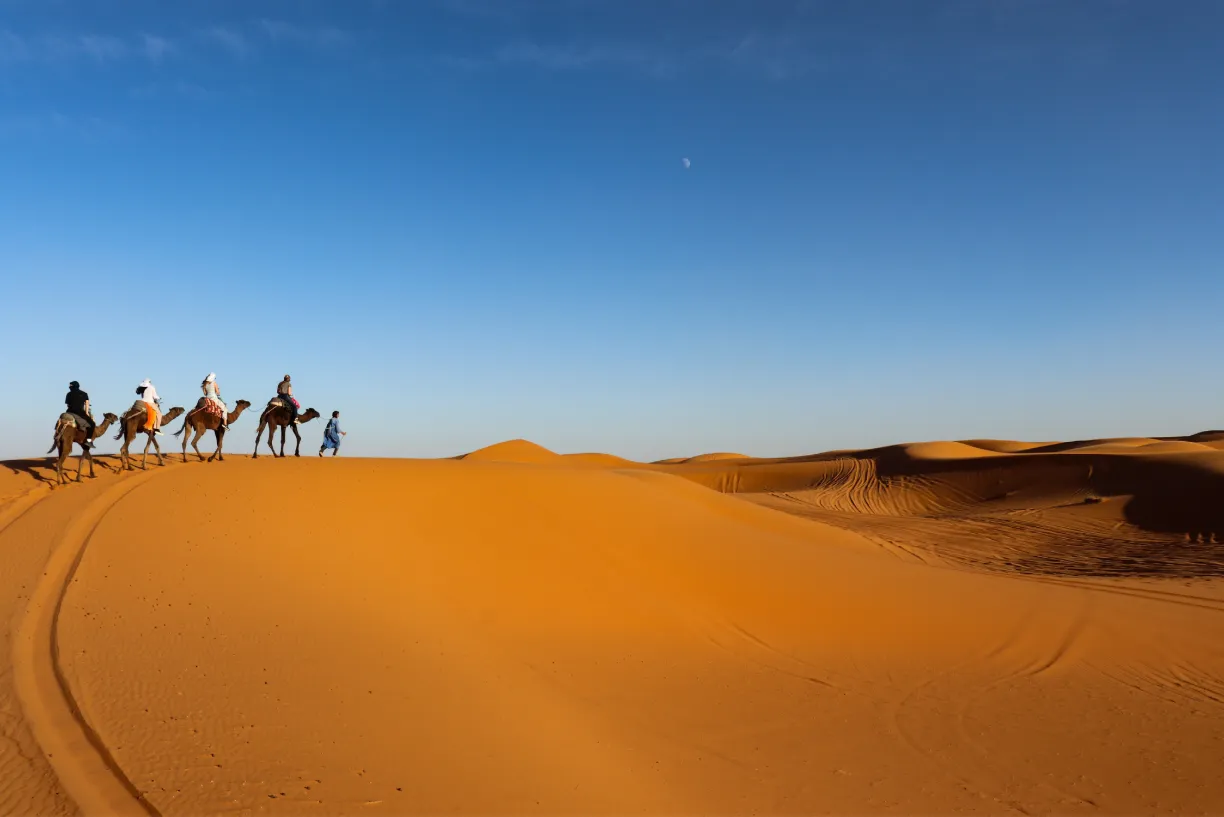
Merzouga first, and the numbers behind it. The famous dunes sit 560km from Marrakech and about 470km from Fez. Zagora, the shorter trip, lies 360km out. The fast train connects the two cities in seven hours, which makes the smartest desert tour possible - start in one city, finish in the other, never repeat a road. Everything else in this guide follows from those sentences.
Four deserts, one word
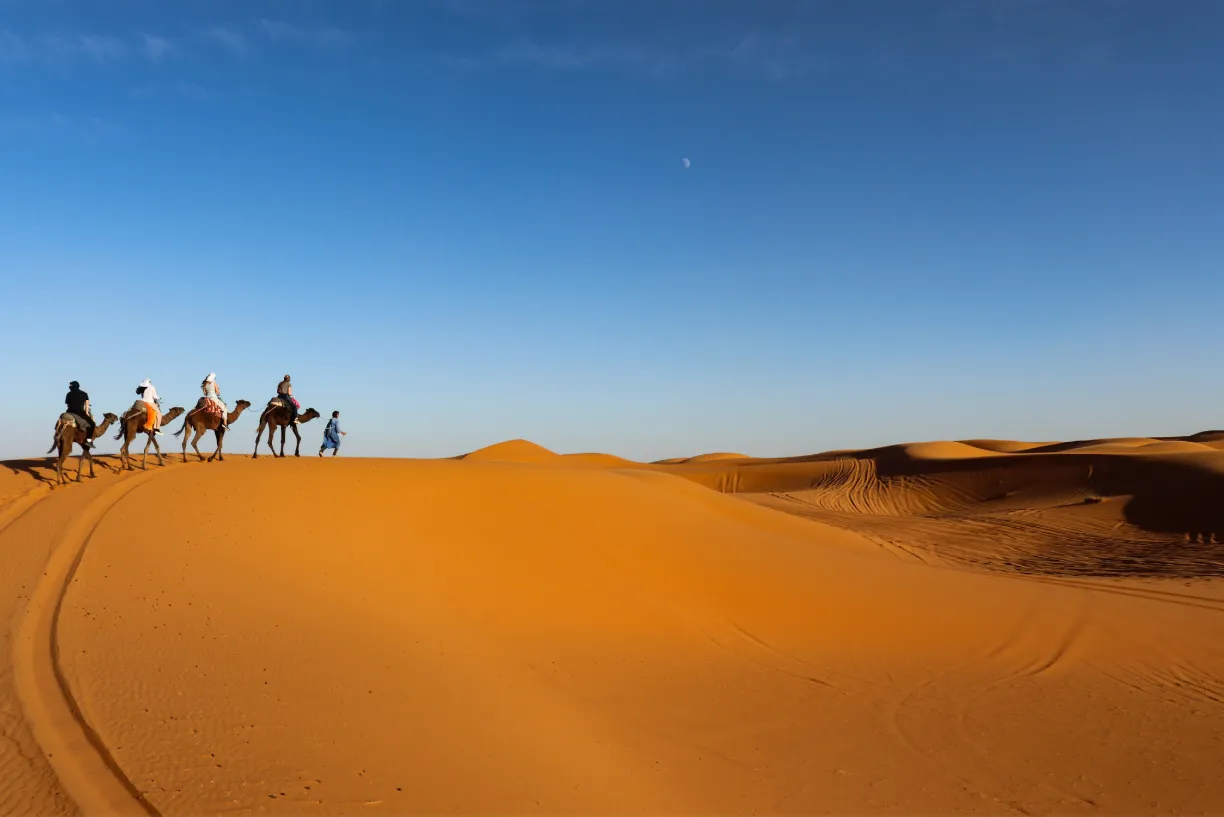
Four deserts answer to the word Sahara in Morocco, and they get sold as if interchangeable. They are not. Agafay, the one under an hour from Marrakech, is gravel, stone and lanterns; at dusk it photographs beautifully, and so would a car park in those foothills. Zagora, a day further, flatters with small friendly dunes over two days. Erg Chebbi at Merzouga is the photograph itself - twenty kilometres of orange sand patting the Algerian border - and it takes three days from Marrakech. Erg Chigaga sits a hundred kilometres beyond the last tarmac, down sand that makes 4x4s complain, and keeps the south's biggest empty erg to itself. Same word, four products. Pick by days, not by flyer.
Sand science, briefly, because it makes the long drive fun. The Erg Chebbi ridges are barchans: crescents of sand pushed by one stubborn wind, migrating a few metres a decade for centuries without ever losing their shape. The flat stony plains you cross meanwhile are regs; herders graze sheep on them, which no first-time visitor believes until the seventh flock. By the time the dunes show up you will be rooting for the wind.
The classic: three days from Marrakech to Merzouga and back
The classic loop from Marrakech runs three days, and it deserves a precise description. Day one eats the High Atlas: Tizi n'Tichka crosses at 2,260 metres and doubles back on itself thirty-odd times, local drivers nap through the curves, and you will grip the door. Ait Ben Haddou pays you off at the bottom, mud brick from the 11th century, entry a hundred dirhams and fair. Ouarzazate's film studios supply lunch. By night you sleep near the Dades Gorge among roses strung along the ditches, and the day totals about 310km. You arrive pleasant, wrecked.
Day two is the fun half. Todra Gorge in the morning, twenty-metre walls with the bus parked inside the rock. Fossil shops at Erfoud, where the black marble holds trilobites older than dinosaurs. Merzouga by mid-afternoon, camels at 4:30pm sharp, tea at camp before dark. Tajine, drums, stars - the sky does most of the talking here, and it has a lot to say.
An alarm at 5:45am buys the sunrise climb, the bit people keep on their lockscreen. Breakfast trails it. Then nine straight hours back to Marrakech, the door near 8pm, dressed up on the booking page as a scenic return. Nobody flies out at 6am the same night; plenty of us have paid for that lesson.
What Sahara tours cost in 2026
The money talk, from somebody who has sat across enough salesmen in half-price sunglasses: shared group tours run about 110 to 180 euros each, a minibus, sixteen strangers, an age spread of two decades. Private 4x4 versions cost 300 to 400 euros split four ways, cheap on the day someone gets carsick. The luxury tier means whatever the salesman ate for breakfast; I have watched the word describe suites with power showers, and I have watched it describe a mattress with a nicer rug. Ask for the camp's name and photos of your tent before a single extra dirham moves. Travel-day lunches, drinks, tips and tickets never sit inside the quote. Dirhams only; cards gave up behind the last mountain pass.
The smarter crossing: Fez to Marrakech, one way
Fez runs the desert as a one-way crossing into Marrakech, and travellers keep discovering this version too late. Day one slips out beneath the cedar woods above Ifrane, crosses to lunch at Midelt - order the apples, the orchards surround the town - then follows the Ziz Valley, palm groves unbroken for kilometres, arguably the prettiest road day in the country, to a night in Erfoud or Rissani. Day two runs onto Erg Chebbi by afternoon, camels at sunset, drums after dinner. Day three swings west through Todra and Dades and settles into Marrakech by evening. Nothing repeats. Your luggage travels onward instead of circling. Itinerary reading Fez before Marrakech? Book this one.
Eat in Rissani before you judge desert food
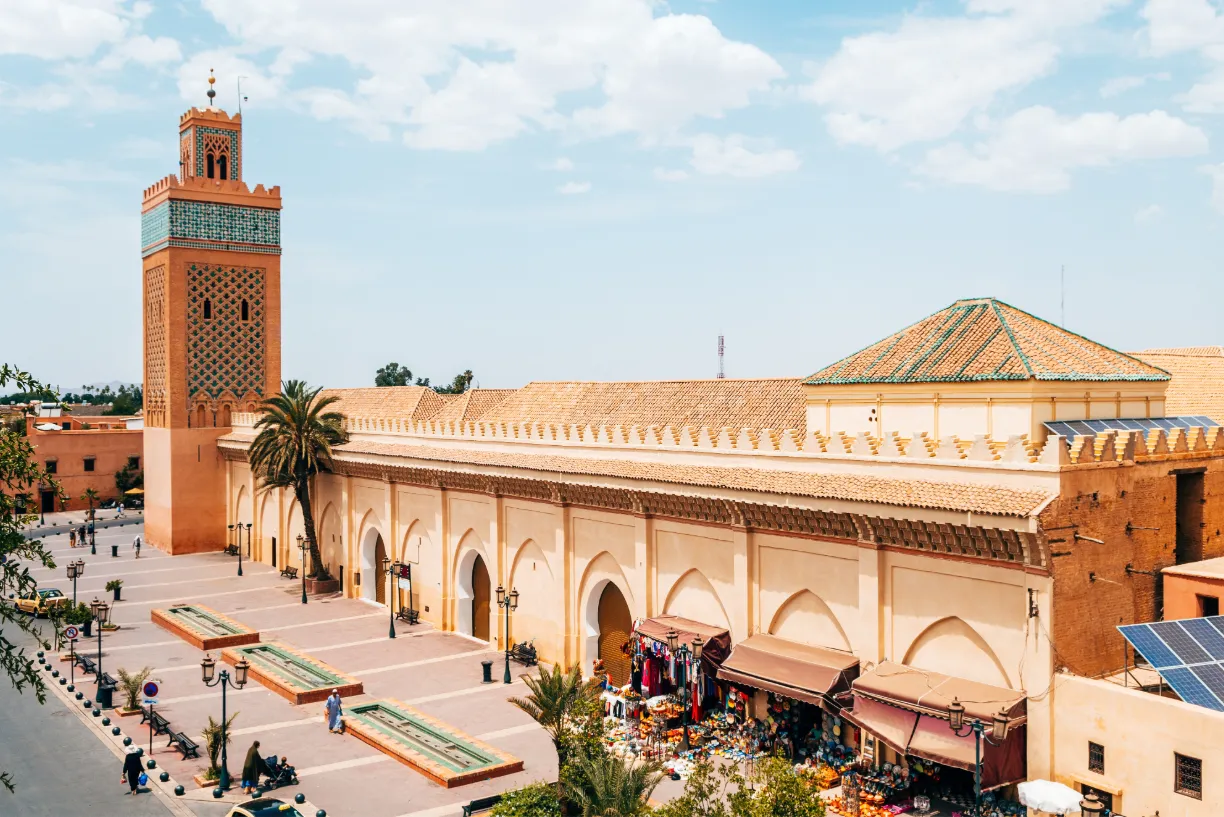
Rissani feeds you properly, and it starts the argument about desert cooking. Its medfouna - desert pizza is the local nickname - comes stuffed with spiced mince, almonds, eggs and enough cumin to perfume your luggage, kneaded flat by hand and baked in a domed clay oven. Thick as a paperback. Gone in two minutes. Buy it from the market queue, not the hotel, and yes, that advice tastes different.
One more October bonus: the Erfoud Date Festival. Dromedary races down the main street, date-stone spitting judged with genuine seriousness, and a market holding more cultivars of the fruit than some countries export. The erg next door sits emptier and cooler than it does in high season. Mid-October trip? Reroute. The festival is worth a detour all by itself.
The compromise: Zagora in two days
Tight on days? Zagora is the compromise. Same Atlas road to Ait Ben Haddou, then the Draa Valley - the longest and greenest palm oasis in Morocco - before the Tinfou sand hills for a walk-up sunset and one camp night. Back in Marrakech by mid-afternoon on day two, evening intact for the city. Said plainly: Tinfou's dunes are hills. Lovable hills. If Erg-Chebbi-grade sand is why you bought the flight, save Zagora for a future visit.
The quiet one: Erg Chigaga
Desert number two? Or allergic to crowds? Erg Chigaga, then. Past M'Hamid the tarmac quits. A proper sand track takes over, and a 4x4 rocks its way, an hour or two, into the largest erg in the south. Camps grow scarce. Silences grow long. At night the quiet turns physical. Some trips add Tamegroute's famous library, shelves of 13th-century manuscripts in a village with no business owning them, and the detour is glorious. Emptiness costs extra, because everything out there travels the hard road. First desert, stay at Merzouga; second desert, nothing in the country competes.
Bring a stargazing app and a jacket regardless, because the camp's second show starts at midnight. From October to March the Milky Way rises bright enough to cast shadows on still nights, Venus ignores bedtime, and the occasional meteor makes a whole camp cheer for no reason. Camps hand out blankets for rooftop beds; try one once, cold and all. Sunrise needs no app, only the alarm nobody loves.
Five checks before you pay
Ask these five before money moves, every one learned off somebody else's ruined trip. The camp by name, first. Photos of your exact tent tier, second - that one brochure word covers suites with power showers and mats thrown straight on rugs. The exclusions, third, because travel-day lunches, camp drinks, tips and tickets live outside every quote. Your departure hour, fourth; a flexible morning has eaten more gorge stops than any landslide. And the winter plan fifth: November into February pushes camp nights toward freezing. Bedding exists. Bring a fleece you can sleep in anyway.
Which trip for which traveller
Then there is the matching problem, easily solved. School-age kids travel best on the Merzouga loop, private, en-suite tents requested; three driving legs that stay short and a camp built for tired children. Couples should take the Fez-to-Marrakech crossing - a trip with a beginning, a middle and an ending, which is romance on wheels and no mistake. Photographers and silence hunters head for Chigaga's footprint-free ridges. And if all you own is one free evening in Marrakech, take Agafay for what it honestly is: a barbecue under lanterns on stone. Duneless, pleasant, no lie attached.
Doing it without a tour
Skip the agencies entirely? Possible, occasionally better. Buses crawl to Rissani, the grand taxis of the south close the final hour to Merzouga, and most camps take direct bookings against a small online deposit. Savings are real, pace is yours. So is the workload: no gorge stops, a timetable that obeys bus schedules, and peak-season camps that sell out months ahead if you leave it late. Renting a car sits in the middle - Ait Ben Haddou or Todra whenever the mood strikes - though winter sometimes shuts the pass, and the final desert road is sand, not tarmac.
Sort the visa before the camels
One admin step before camel deposits: entry rules. Passport by passport, Morocco is visa-free, covered by an online tourist eVisa, or consulate territory - the visa-exempt list settles your case in a minute. The eVisa overview explains the requirements and the 3-step walkthrough shows the whole form answered field by field. Cheap insurance: sort this first. And if the desert is one piece of a bigger route, the 10 best places to visit in Morocco in 2026 fits it alongside Marrakech, Fez and the coast.
Frequently asked questions
Which Sahara trip has the better dunes?
Merzouga, and it isn't close. The twenty-kilometre ridge of Erg Chebbi is the thing you have been imagining since the flyer photo, and every camp tier from mattress to suite sits within a camel walk of it. Zagora sells shorter. Chigaga sells quieter. Only Merzouga looks like the picture living in your head.
Should the trip start in Marrakech or Fez?
Whatever sits earlier in your route. Most tours run one-way now: out of Marrakech you loop back over the Atlas, and out of Fez the crossing simply ends in Marrakech without repeating a road. Same sand either way. Let the itinerary decide, not the booking page.
Do desert camps have showers and toilets?
Depends what you paid. Bottom tier means a shared dry toilet and a bucket, mid tiers add en-suite bathrooms with hot water, and the top camps add plunge pools timed for the stars. Get photographs of the actual tent before upgrading; tier words mean nothing without one.
Is the camel ride safe for children?
The caravan walk is slow and handler-led, and children ride with a parent from about five years old, holding on and complaining about the hump in equal measure. Sandboarding bruises pride only. Quads wait for teenagers, on the optional afternoon.
What is never included in the tour price?
Travel-day lunches, drinks at camp, tips for driver and crew, entrance tickets like the hundred dirhams at Ait Ben Haddou. Carry small notes. There is no card machine for eight hundred kilometres, and the camp crew earns every dirham of it.
When should you do a Sahara desert tour?
October into April. March runs wildflowers down the valleys. Summer cooks; the camps empty and 45 degrees makes enemies of everyone. Winter works, though nights sink near zero, and at 5:45am on the dune you will want that fleece.
Can you see the Sahara on a day trip from Marrakech?
Only Agafay, the stone desert forty minutes out, and calling it the Sahara is the industry's best theatre: lanterns, barbecue, no sand. Real ergs cost one overnight at minimum, and two nights is where the trip turns from a transfer into a holiday.
No comments yet.