
What Is the Japan eVisa?
The Japan eVisa is Japan's official online tourist visa system, run by the Ministry of Foreign Affairs (MOFA). Instead of visiting a consulate, you complete your entire visa application on the web - passport details, photo, and supporting documents all go in through the online portal.
Once approved, you get a digital "Visa Issuance Notice" by email, which you show on your phone at check-in and on arrival in Japan. There's no sticker or stamp involved at all.
It's currently issued as a single-entry, short-term tourist visa, with the maximum stay set at up to 90 days for most nationalities (some countries have shorter fixed periods - more on that below).
Who Is Eligible for the Japan eVisa in 2026?
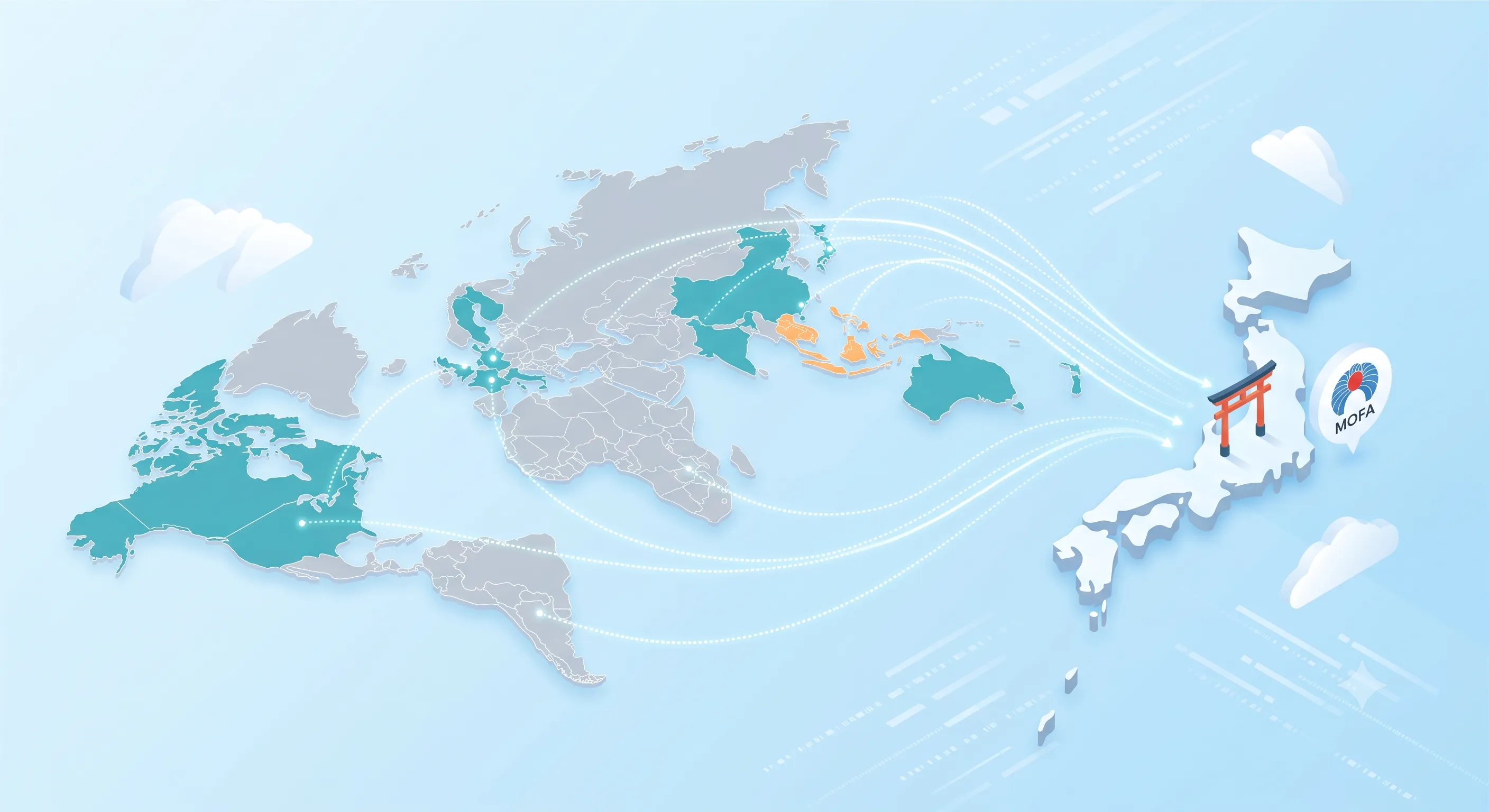
Eligibility depends on your nationality and country of residence. As of the latest Ministry of Foreign Affairs update (May 2026), the eVisa system works through two different routes:
Apply Directly Online
If you reside in:
Apply via Accredited Travel Agency
If you reside in:
*Excluding Jeju jurisdictionGeneral Eligibility Rules
- You must be traveling for tourism only - the eVisa doesn't cover business, study, work, or family-visit trips.
- You need to hold an ordinary passport (not a diplomatic or official one).
- You must be entering Japan by air or by international ferry (currently limited to routes between Japan and Busan or Shanghai).
- Some applicants may be asked to attend an in-person interview at the relevant Japanese embassy or consulate.
- If your passport already lets you enter Japan visa-free, you don't need an eVisa for a short tourist stay.
Why Travelers Choose the eVisa Over a Traditional Visa
- Apply entirely from your phone or laptop - no embassy visit
- Lighter document checklist than the paper process
- Digital issuance notice - nothing to lose, nothing to laminate
- Generally quicker turnaround than in-person applications
- Track your application status online at any time
Documents Required for the Japan eVisa
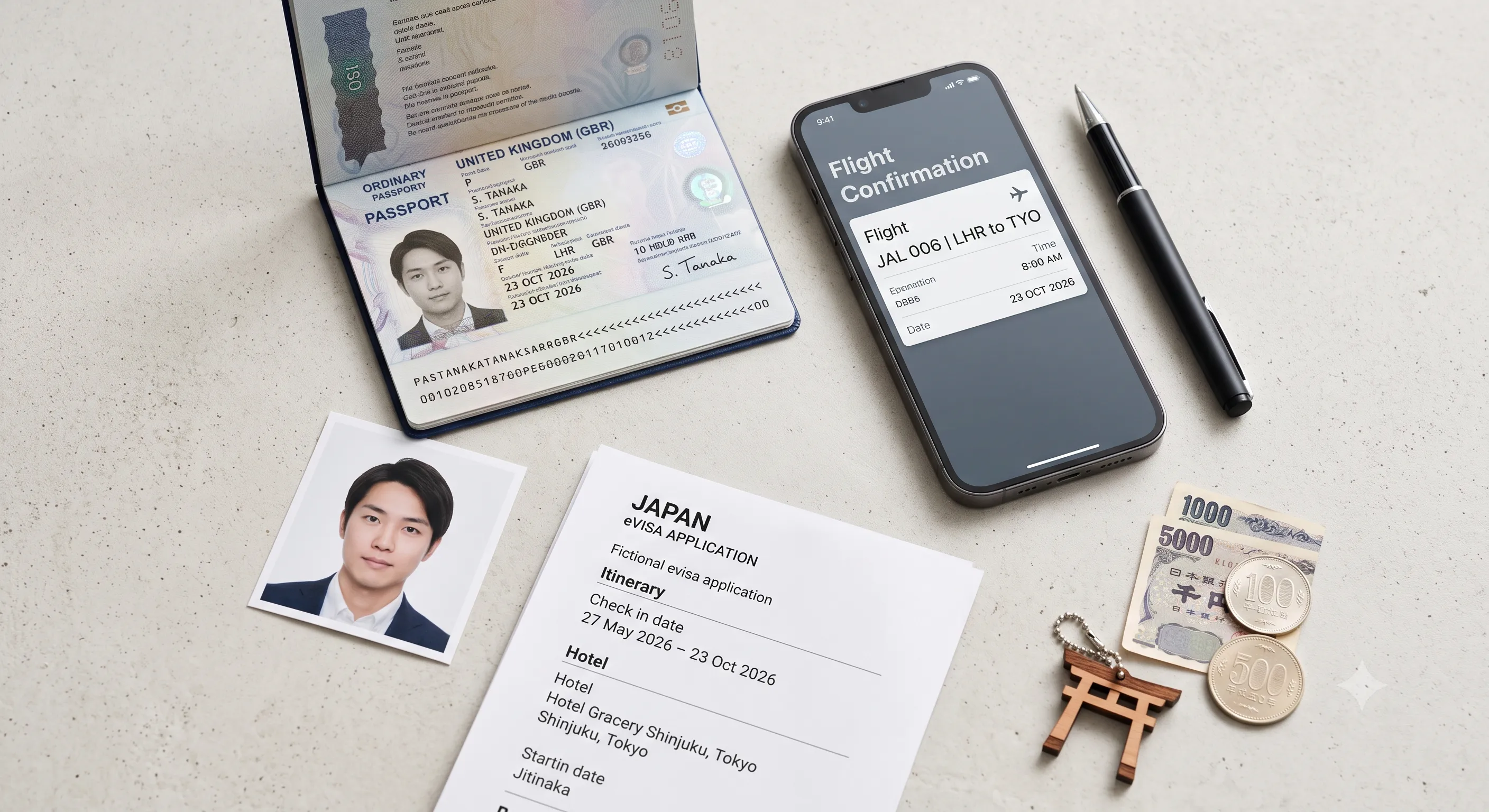
Requirements can vary slightly depending on your nationality, but generally you'll need:
- A clear scan or photo of your passport bio page
- A recent passport-style photo
- Proof of travel itinerary (flight booking, accommodation details)
- Additional supporting documents requested based on your country of residence
Note: The eVisa portal tells you exactly what's needed once you enter your nationality and residence details, so it's worth starting the application early to see your specific checklist.
Japan eVisa Application Process, Step by Step
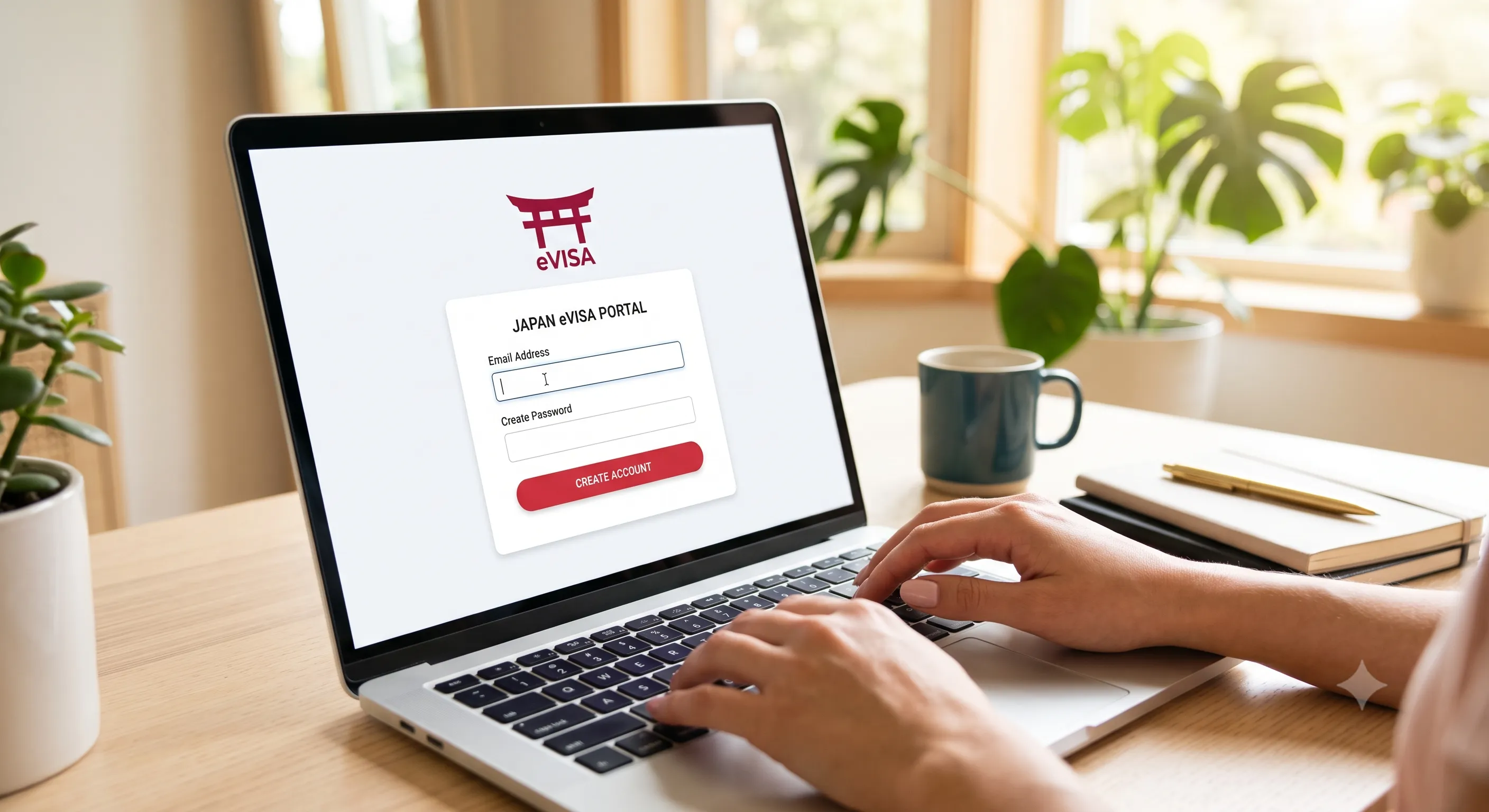
Processing Time & Visa Fees

Processing Time
Most applications are processed within about 5 business days once confirmed complete. However, processing can stretch beyond a month during peak seasons or if extra documents/interviews are required. Apply at least a few weeks in advance!
eVisa Fees
Single-entry eVisa fees are around ¥15,000 (subject to regional/bilateral variations). Payment must be made online via credit/debit card. Fees are non-refundable once issued.
How Long Can You Stay on a Japan eVisa?
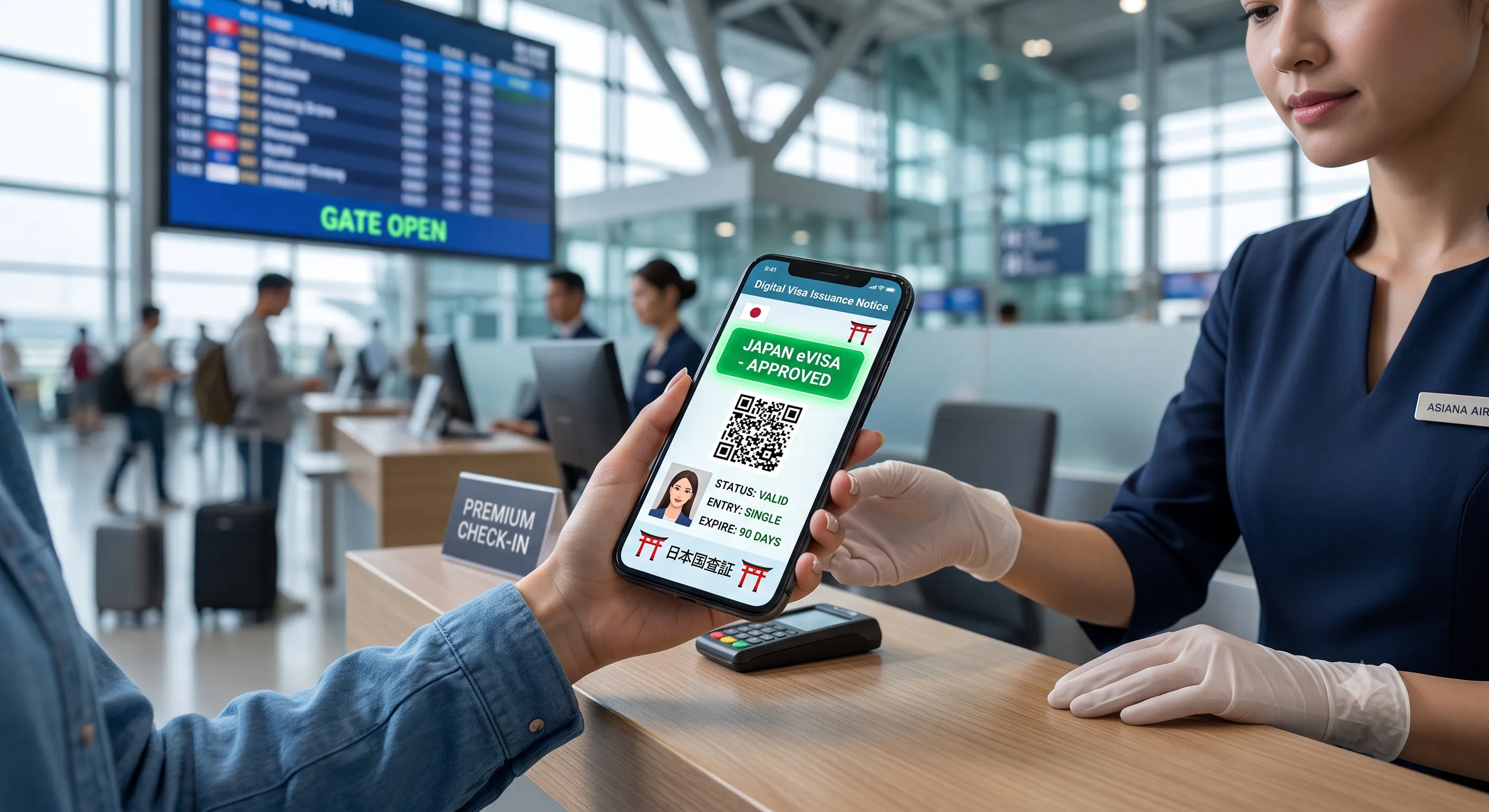
The stay period is decided by the reviewing Japanese overseas establishment based on your travel plans. For most eligible nationalities, it can be up to 90 days. Fixed shorter periods apply to specific regions:
| Nationality / Residence | Maximum Stay Allowed |
|---|---|
| Most Eligible Nationalities | Up to 90 Days |
| Chinese nationals residing in China | 15 or 30 Days |
| Vietnamese nationals residing in Vietnam | 15 Days |
| Filipino nationals residing in the Philippines | 15 Days |
What If You're Not Eligible for the eVisa?
If your nationality isn't yet covered, or your trip is for business, study, work, or family visits, you'll need to apply for a traditional visa directly at a Japanese embassy, consulate, or accredited visa center. This requires an in-person appointment and a physical visa sticker in your passport.
Frequently Asked Questions
Can I upgrade a Japan eVisa to a long-term visa after arriving?
No. The eVisa only covers short tourist stays. For a longer stay or a different purpose, you need to apply for the correct visa type through a Japanese embassy or consulate before you travel.
What happens if my Japan eVisa application is rejected?
If your application is refused, you typically need to wait before you can reapply. MOFA does not disclose the specific reason for a rejection.
Do I need to print my Japan eVisa before traveling?
No. It's a digital Visa Issuance Notice, shown on your smartphone or device at check-in and immigration. A printed copy or screenshot won't be accepted — it needs to be viewed live from your account.
Can I apply for a multiple-entry Japan eVisa?
No. The current eVisa only covers single-entry stays. If you need multiple entries, a traditional visa through an embassy is required.
Is the Japan eVisa the same as visa-free entry or Japan's upcoming ETA system?
No. Visa-free entry applies to passport holders with exemption agreements. The eVisa is a distinct online visa system for travelers who require a visa to enter Japan.
Excellent guide! The article explains the Japan eVisa process in a simple and well-organized way. I especially found the eligibility, required documents, and application steps very helpful. This is a great resource for anyone planning a trip to Japan in 2026. Keep up the great work!
One of the most complete Japan eVisa guides I’ve read recently. The document checklist was especially useful.