
Brazil Visa Guide
Detailed visa and entry information for the country you are viewing.
Apply online
Apply through our trusted visa processing partner.
If your flight itinerary routes you through a Brazilian airport on the way to another country, you might assume a short layover doesn't require any paperwork. For several nationalities, that assumption is wrong - and it's one of the most common ways travelers get caught out at check-in.
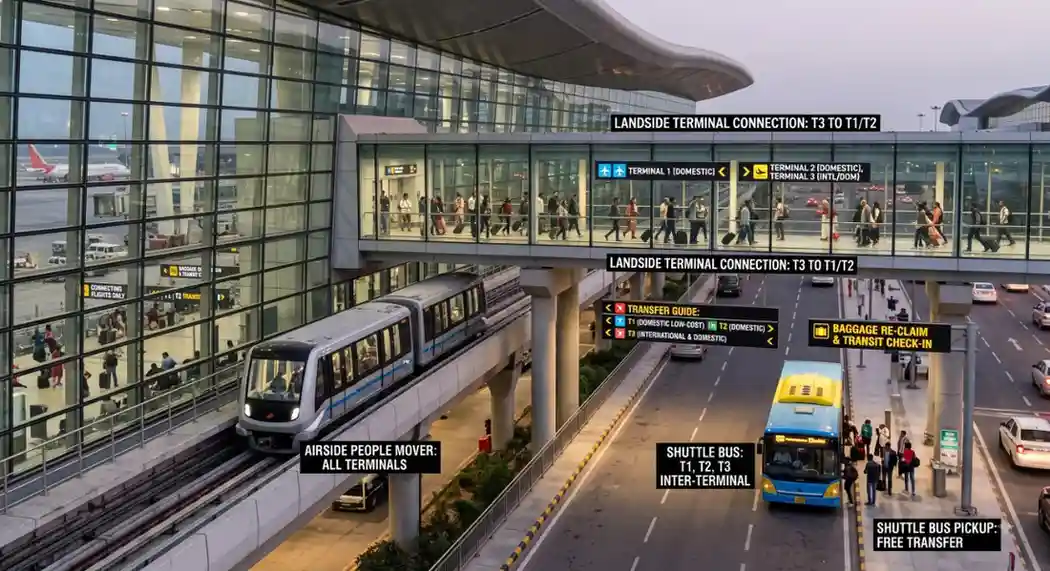
Yes, if you hold a nationality on Brazil's eVisa list and your connection requires you to clear Brazilian immigration - even briefly, and even if you never leave the airport. No, if you stay entirely within the international transit area and never pass through immigration control. The deciding factor is whether you clear immigration, not how long your layover is.
The Transit eVisa applies to travelers who are not visiting Brazil as a destination, but are instead connecting through a Brazilian airport en route to a third country - for example through São Paulo–Guarulhos (GRU), Rio de Janeiro–Galeão (GIG), or Brasília (BSB) on the way to another South American, European, or North American destination.
It applies to the same nationalities covered by Brazil's eVisa system generally: the United States, Canada, and Australia since 10 April 2025, and 30+ additional nationalities from 1 January 2026. Brazil is a major international connection hub, and its transit visa rules exist because travelers on these nationalities can technically enter Brazilian territory during a layover - even briefly - depending on how their connection is routed.
This is the part that catches people off guard. The rule comes down to one simple test: do you clear Brazilian immigration during your layover, or not?
You do NOT need a Transit eVisa if you remain entirely within the airport's international transit area and never pass through immigration control - for example, a same-terminal connection where you stay airside throughout.
You DO need a Transit eVisa if your connection requires you to clear Brazilian immigration, even if you never leave the airport itself - this can happen with certain terminal transfers, baggage re-checks, or overnight layovers.
You DO need a Transit eVisa if you have an extended layover that requires leaving the airport, collecting checked luggage, or staying at a nearby hotel overnight.
If you're unsure whether your specific connection requires clearing immigration, check directly with your airline, since routing through Brazilian hubs varies by carrier and itinerary.
Meeting the requirements below is what makes an application eligible - not just holding a passport from a listed nationality.
The document list is lighter than for tourism or business categories, since you're not entering Brazil as a destination:
Because the Transit eVisa is tied to a specific connection, your flight itinerary is the single most important document in the application - make sure flight numbers, dates, and passenger name match exactly across your ticket and application.

Approval typically takes 48–72 hours, though official guidance allows up to 10 business days. Because transit connections are often booked closer to travel dates than a planned holiday, it's worth applying as soon as your itinerary is confirmed rather than waiting until shortly before departure.
The application fee is the same $80.90 USD as Brazil's other eVisa categories, paid online during application. Validity follows the same nationality-based rules as the Tourist and Business eVisa:
| Nationality | Validity Period | Entries |
|---|---|---|
| US citizens | Up to 10 years | Multiple entries |
| Canadian and Australian citizens | Up to 5 years | Multiple entries |
In practice, most transit eVisa holders only use their visa for the specific connection they applied for, but the long validity period means frequent travelers connecting through Brazil repeatedly don't need to reapply each time.
check with your airline whether your specific connection requires clearing Brazilian immigration.
on the official VFSeVisa portal, selecting the Transit category.
including your full connecting itinerary.
online.
then print your approved eVisa and carry it with your travel documents. Airlines will not board eligible passengers without a valid eVisa on file, even for a transit-only connection.
Whether you need a Transit eVisa comes down to your specific routing. Here's how the rule plays out in practice:
You land and board your next flight without leaving the international transit area - for example, a GRU-to-GRU connection on the same airline group where you never clear immigration.
Your connection routes you between terminals or airlines in a way that requires clearing Brazilian immigration control, even if you re-board within a few hours.
Some itineraries require collecting and re-checking your luggage between flights, which typically means clearing immigration first.
An extended connection that has you leaving the airport - for a hotel stay, for instance - requires clearing immigration and, in turn, a Transit eVisa.
Routing varies by airline and airport terminal layout, so always confirm your specific itinerary with your airline rather than assuming based on layover length alone.
You're exempt when your connection keeps you entirely within the airport's international transit area and you never pass through immigration control - most commonly a same-terminal, same-baggage connection on a through-checked itinerary. In these cases, you remain "airside" the whole time and never legally enter Brazilian territory, which is what the eVisa requirement is tied to.
You're also exempt if your nationality isn't on Brazil's eVisa list, regardless of how your connection is routed.
It depends on whether your connection requires clearing Brazilian immigration control, not on how long the layover is or whether you leave the terminal. Some short connections still require clearing immigration due to terminal layout or baggage handling - check with your airline before assuming you're exempt.
No, both carry the same official application fee of $80.90 USD.
A Transit eVisa is specifically for passing through Brazil, not for sightseeing or extended stays. If you want to leave the airport to explore during a long layover, you should apply for a Tourist eVisa instead, which allows a full stay of up to 90 days.
You won't be allowed to board. Airlines check for a valid eVisa on file before issuing boarding passes for eligible nationalities, so travelers without one risk being denied at check-in, not just at the Brazilian border.
Brazil's eVisa requirement generally applies regardless of entry method, but transit scenarios most commonly arise from air travel connections. If you're transiting by land or sea, confirm your specific requirement directly, since the rules can differ from airport transit.
VistoRoute is an independent visa information and facilitation platform and is not affiliated with the Government of Brazil or any consular authority. We help travelers understand eligibility and prepare accurate applications, but all final decisions on visa issuance rest with Brazilian immigration authorities and airline check-in staff. For official government guidance, always cross-check with your nearest Brazilian consulate or your airline directly.