

On this page
Quick answer
Canadians have needed a Brazilian visa since April 10, 2025, and the eVisa is the normal route: one online application, $80.90 per person, up to 5 years of multiple entry, stays of up to 90 days and a decision in up to 10 business days, often 2 to 5. Apply 3 to 4 weeks before you fly, then print the approved eVisa and carry it with your passport.
Do Canadians Need a Visa for Brazil?
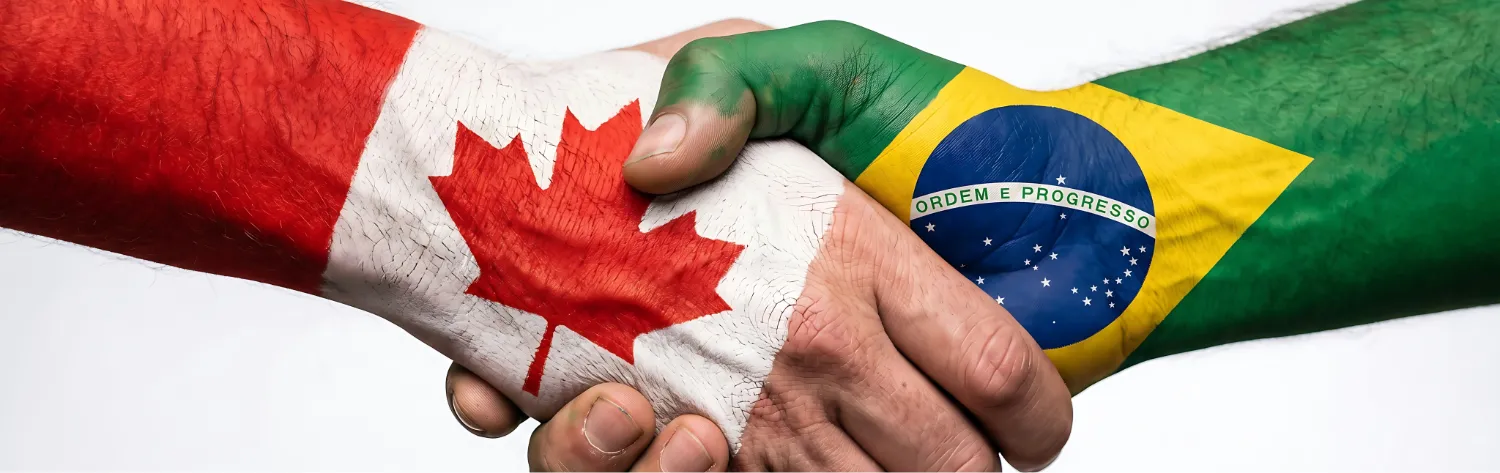
Yes, and it is a real policy change worth double-checking if you last flew to Brazil before 2025 or you are going by an older guidebook. Since April 10, 2025, Canadian passport holders need a valid Brazilian visa for any entry: tourism, business, a stopover or anything else. Before that date, Canadians enjoyed visa-free entry going back to 2019.
Before April 2025
- Visa-free entry for tourism and short visits, in place since 2019
- A passport at the border, with no application to submit
- Nothing to print, no fee, and no waiting window before you fly
Since April 10, 2025
- An eVisa or consular visa for every entry, stopovers included
- Airlines check for a valid eVisa before they issue a boarding pass
- The same rule for Canada, the United States and Australia
The change landed on Canada alongside the United States and Australia, as part of what Brazil's foreign ministry frames as a reciprocity policy: Canada requires a visa from Brazilian citizens, so Brazil now requires one from Canadians in return. Canadian travel guidance for Brazil has been updated to match, so this is confirmed government-to-government policy rather than a rumor circulating on travel forums.
Eligibility is the easy part. Any Canadian citizen holding a valid Canadian passport can apply, with no separate easy or hard tier. The eVisa is the sole route for short visit-type stays, and it replaced the old need to visit a Brazilian consulate in person for this kind of trip. If your case looks unusual, start with our Brazil eVisa eligibility rules before anything else.
What Can You Do in Brazil on a Canadian eVisa?
Brazil groups short visits under its Visitor Visa category, known as VIVIS, and the eVisa sits inside it. These are the trip types it covers:
Holiday trips sit under the Brazil tourism eVisa, while meetings and conferences sit under the Brazil business eVisa. Both follow the same document list further down this page.
Paid employment inside Brazil is not covered under any circumstance. If a Canadian employer is sending you to work directly for a Brazilian entity, or you are being paid locally, a different and longer-term visa category applies: trying to use the tourist or business eVisa for paid work risks denial of entry or removal. The same applies to a full academic program, a local job or residency, because those cases go through a Brazilian consulate in Canada and the eVisa does not extend to them.
Brazil eVisa Requirements for Canadian Citizens
Three things sit at the base of every Canadian application. Get those right and most delays disappear.
A valid Canadian passport
- Signed by you, with at least two blank pages left for entry stamps
- Valid for at least one month beyond your arrival date, which is the eVisa portal's stated minimum
- Six months of spare validity is the safer buffer, since airline check-in staff and some border posts apply the broader six-month convention anyway
- Renew now if it expires within the next year, rather than cutting it close
A compliant digital photo
- 3.5 x 4.5 cm on a plain white background for the online portal
- Full color, neutral face, both eyes open, taken within the last six months
- A fresh shot only, never cropped out of an old passport or an ID card
- Consular routes still list the classic 2" x 2" size, so double-check which spec your route asks for before you book the photo
A completed online application
- Personal and travel details that match your supporting documents exactly
- A color scan of the bio-data page, the page of your passport carrying your photo and details, matching the official sample specification
- An email address you check regularly, because status updates and document requests land there
That is the baseline for every Canadian applicant. The Brazil eVisa requirements checklist adds what children, business travelers and event attendees stack on top of it.
How to Apply for the Brazil eVisa from Canada
The whole thing runs as one online flow. With your documents open beside you, most Canadians finish it in a single sitting.
Start the application and confirm Canada as your nationality
Pick Canada as your passport nationality first, since that choice sets your fee and the documents the form will ask for.
Fill in the online form
Add your passport and travel details, typing your name exactly as the passport shows it. Mismatches here are what send applications back.
Upload your passport bio page and photograph
Send a color scan with nothing cropped, plus your compliant photo. This is the step that holds up the most Canadian applications, so do not rush it.
Track your status by email
Updates arrive by email, and they sometimes land in the spam folder, so check that folder as well while you wait.
Download and print your approved eVisa
The approval arrives as a PDF. Save it, print it, and keep a photo of it on your phone as a backup, just not as your only copy.
Carry the printout with your physical passport
Airlines ask for the printed eVisa before they allow boarding, and Brazilian immigration checks it again on arrival.
Timing matters more than speed here. Most travelers apply 3 to 4 weeks ahead, and applying at least two months before travel gives you room to fix a returned document without putting the trip at risk. Our how to apply for a Brazil eVisa guide walks the same route with more detail per step.
Brazil eVisa Processing Time for Canadian Applicants
How long you wait depends on when your application becomes complete. The clock starts when a full, verified file is submitted, not when you open the form.
- Standard window
- Up to 10 business days once a complete, verified application has been submitted
- Often seen
- 2 to 5 business days for clean, complete applications. Ten days is the figure to plan around, not the fastest outcome
- Clock start
- An incomplete submission waits outside the standard queue until the missing piece arrives
- Apply ahead
- 3 to 4 weeks before your travel date, or at least two months if you want a comfortable margin
Some travelers report a faster turnaround, and a request for extra documents stretches the timeline whenever a reviewer asks for more. Cases with extra paperwork run longer than the standard window, which is exactly what the Brazil eVisa processing time guide breaks down, including what to do when your travel date is already close.
eVisa Validity, Entries and Maximum Stay
Three numbers decide how you plan the trip, and they are the same for every Canadian applicant.
Your eVisa allows multiple entries throughout the validity period, so you are not paying again for the next holiday. One payment covers the full term: up to 5 years for Canadian citizens and up to 10 years for US citizens, which means renewal timelines will not match a US travel companion. The fee is the official amount and the authorities can update it, so check the amount shown in your application before you pay. The Brazil eVisa costs page breaks the number down.
A 5-year eVisa does not mean 5 continuous years in Brazil. Each visit stays capped at 90 days, extendable once, and the clock resets from your entry date each migratory year, the rolling 12-month window immigration counts you against. Up to 180 days in total per 12-month period is the ceiling, extension included.
Travelling With Children Under 18
Minors need their own application, nobody travels on a parent's eVisa, and this is the category that stalls most often. Gather these before you start the form:
- Their own passport and a recent photograph
- A color copy of the birth certificate
- A notarized parental authorization letter, signed by both parents
- Color copies of both parents' passport bio and signature pages
- Where applicable: a notarized sole-custody court order, a death certificate for a deceased parent, or proof of a legal name change
- A separate application and a separate fee for every child, including babies
Canadian families with joint or shared custody should confirm which combination of documents applies to their situation before applying, since the required set changes with custody status. The court order, the death certificate or the name change proof only enters the file when the situation calls for it.
Extending Your Stay Beyond 90 Days
Extensions are handled by the Polícia Federal, Brazil's federal police, directly rather than through the eVisa system. If your trip needs more than 90 days, run these steps in order:
Do not let the date pass. Filing after your original stay has already lapsed puts you at risk of a fine and a requirement to regularize your status or leave the country within a set window. Put the deadline in your calendar on landing day, not in the last week of the trip.
Common Application Problems and How to Avoid Them
Every one of these has held up a real Canadian application. Read the list once before you pay:
Entry Requirements After Your eVisa Is Approved
An approved eVisa lets you board the plane; it does not settle entry on its own. These are the checks that come after approval:
- Carry the printed eVisa with your physical passport, because airlines check for a valid eVisa before they allow boarding
- Answer whatever Federal Police officers ask at the port of entry, since they make the final call and may raise your onward travel, accommodation or funds
- Keep proof of onward travel, accommodation and funds handy, even on the days nobody asks
- Yellow fever vaccination is not required for entry, though it is recommended if you are heading into parts of the Amazon or other interior regions
- If Brazil is one leg of a longer South America trip, check each neighboring country's rules separately, since some ask for proof of vaccination from travelers arriving from Brazil
- Keep the printout in your hand luggage rather than the hold, so the paperwork is in front of you if an officer asks
Officers can ask about your plans in the queue, and a short answer with the paperwork already out keeps that conversation brief. Nothing here is unusual screening, it is the normal arrival routine.
2026 Check: What Canadians Should Sort Before Booking Flights
The rules moved recently, so anything you read before 2025 no longer describes your trip. Run this list before you put money on a flight:
That is the Canada-specific picture for 2026. The rest of the visa detail, every category and every nationality guide, sits on the Brazil visa hub.
Frequently Asked Questions
Has Brazil really brought back the visa requirement for Canadians?
Yes. Since April 10, 2025, Canadian citizens have needed a Brazilian eVisa or consular visa for entry, which ended the visa-free access Canadians had enjoyed since 2019.
Do I need to visit a Brazilian consulate in Canada to get the eVisa?
No. The standard visit-type eVisa is a fully online application. A consulate visit is only needed for categories the eVisa does not cover, such as long-term study, local employment or residency.
How much is the Brazil eVisa for Canadians?
$80.90 USD per person, charged in US dollars no matter where you apply from. The fee is non-refundable whatever the outcome, and it can change, so check the amount shown in your application before you pay.
How long is the Brazil eVisa valid for Canadian citizens?
Up to 5 years from issue, with multiple entries. That is shorter than the 10-year validity US citizens receive, so renewal timelines can differ inside one travelling group.
How many days can I stay in Brazil per visit?
Up to 90 days per visit, extendable once to a maximum of 180 days within any 12-month period.
How do I extend my stay past 90 days?
Apply at a Polícia Federal office before your original 90 days expire, with your passport, proof of funds and the completed extension form. The extension fee is roughly R$110, paid through the official GRU payment slip.
Can my children travel on my eVisa application?
No. Each minor needs a separate application with their own passport and photo, plus supporting documents such as a birth certificate and a notarized parental authorization.
Does an approved eVisa mean I will definitely be let into Brazil?
No. Final entry decisions rest with Federal Police officers at the border, even for travellers holding an approved eVisa.
Can I work in Brazil on the tourist or business eVisa?
No. The eVisa covers non-remunerated activity only. Paid work needs a different visa category, applied for separately.
How far in advance should Canadians apply?
Applying 3 to 4 weeks before travel is the usual working window, and at least two months is the safer margin, since processing takes up to 10 business days and document corrections add time.
VistoRoute is an independent visa information and facilitation platform and is not affiliated with the Government of Brazil or any consular authority. We help travelers understand eligibility and prepare accurate applications, but all final decisions on visa issuance rest with Brazilian immigration authorities. For official government guidance, always cross-check with your nearest Brazilian consulate.