
On this page
Can Dual Citizens Get a Brazil eVisa? Direct Answer
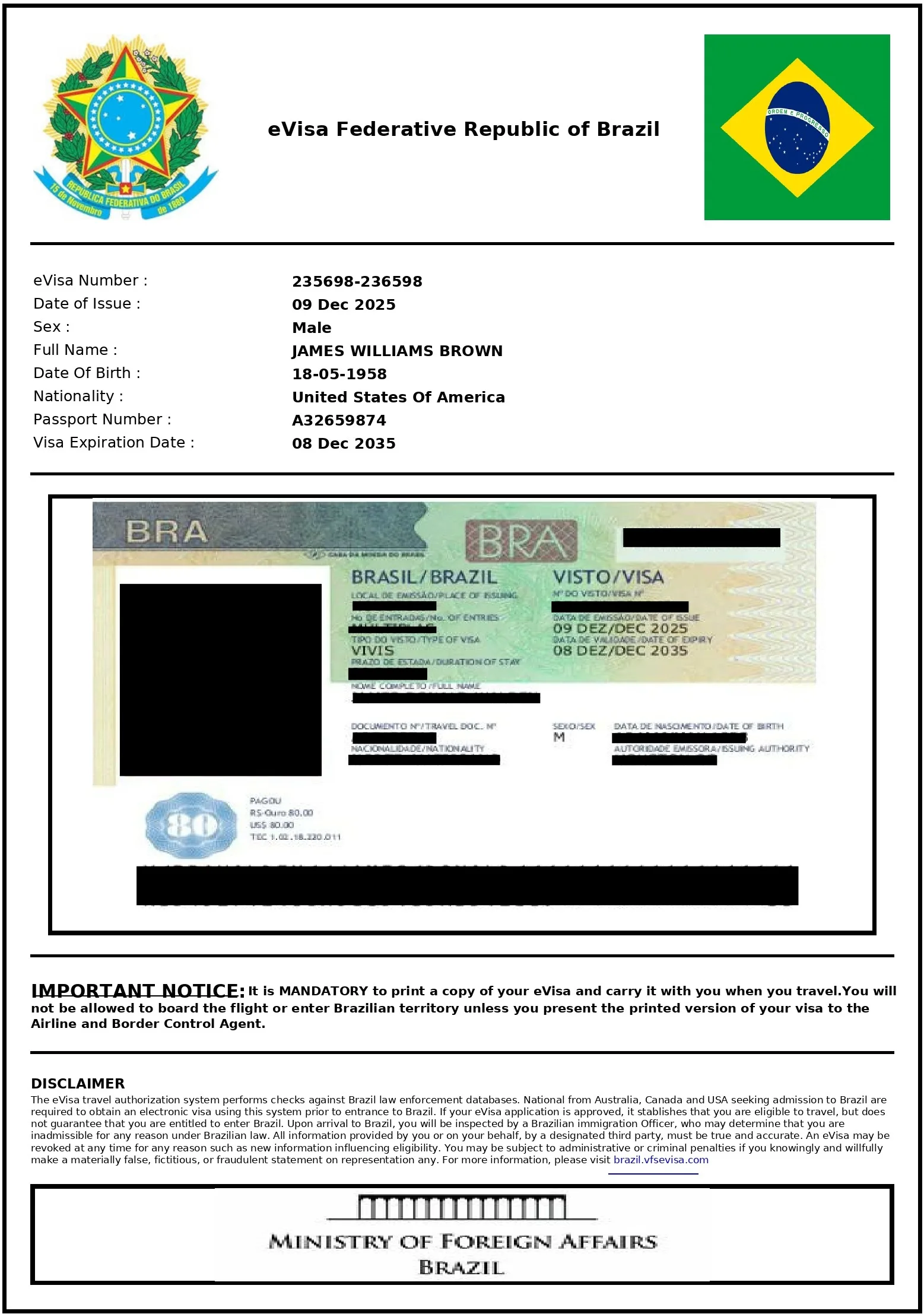
Yes. Since 20 August 2026, Brazilian consulates can issue a visitor visa in the foreign passport of a dual national. If you hold a US, Canadian or Australian passport, you can apply for the eVisa online and travel to Brazil on that passport. But: carry a Brazilian ID document too, and if you already have a valid Brazilian passport, using it is still simpler and costs nothing.
What Changed on 20 August 2026
Before the change, Brazilian citizens were generally expected to travel on a Brazilian passport. Consulates did not issue Brazilian visas to people they recognised as Brazilian citizens, which left dual nationals in a difficult spot if their Brazilian passport had expired and they wanted to travel on their US, Canadian or Australian passport.
The Ministry of Foreign Affairs directive of 20 August 2026 changed that. Consulates are now authorised to issue visas in the foreign passports of dual nationals, and the same option applies to the electronic visa for US, Canadian and Australian passport holders. In practice, the eVisa application no longer asks dual nationals for a declaration of non-Brazilian citizenship.
Important: this exception applies only to the visitor visa (VIVIS) category. Other Brazilian visa types are still not issued to Brazilian citizens, regardless of any other nationality they hold.
Who Qualifies for the Dual-National eVisa
You need two things at the same time: recognised Brazilian citizenship and an eVisa-eligible foreign passport.
- Brazilian citizenship - by birth, descent or naturalisation. A Brazilian birth certificate, RG, CPF or expired Brazilian passport is normally enough to show the link.
- An eligible foreign passport - US, Canadian or Australian. Other foreign passports cannot use the eVisa, even for dual nationals.
- A short visit - tourism, business, transit, sport or artistic activities, up to 90 days. Residency, work and study follow different visa routes.
Not a dual national? Read the passport-specific guides for Brazil visa for US citizens, Brazil visa for Canadian citizens or Brazil visa for Australian citizens.
Which Passport Should You Use?
There is no single right answer for every dual national. Use the table below to match your situation.
| Your situation | Best option | Why |
|---|---|---|
| Valid Brazilian passport | Travel on the Brazilian passport | No visa, no fee, no extra documents |
| Expired Brazilian passport, short trip | Foreign passport + eVisa | Allowed since 20 August 2026 |
| Travelling on a foreign passport by choice | Foreign passport + eVisa | Carry a Brazilian ID as well |
| Long stay, work or study | Brazilian passport or a different visa | The eVisa covers short visits only |
What to Show at the Brazilian Border
Travelling on a foreign passport does not remove your Brazilian nationality - but the Federal Police needs to see evidence of it. The consular guidance is specific: present a Brazilian identification document, even if it is expired.
- Bring your RG - a Brazilian identity card with photo. An expired RG is still useful for this purpose.
- Without Brazilian ID - you may be recorded as a foreign visitor, and the stay limits of the eVisa you presented will apply.
- Carry the approved eVisa - a printed copy is safest, alongside the passport the eVisa is linked to.
A driving licence, professional card or birth certificate does not replace the RG for this purpose. If you have a valid Brazilian passport, carrying it as well removes any doubt. See the Brazil entry requirements guide for the border checklist.
Dual-National Children: The Rule That Still Applies
A child with Brazilian citizenship and a foreign passport can also receive an eVisa. That does not remove Brazil's travel authorisation rules. If a Brazilian minor leaves Brazil unaccompanied, or with only one parent or guardian, the Federal Police may require a travel authorisation even when the child is travelling on a foreign passport.
Prepare the authorisation separately, or include it in the child's Brazilian passport, following the consulate's current instructions. The family and minors eVisa guide lists the documents, including birth certificates and parental consent.
Documents for a Dual-National eVisa
The application is the standard eVisa form. The only difference is that you should be ready to show the Brazilian side of your identity if the consulate asks.
- Foreign passport - US, Canadian or Australian, valid for the trip, in good condition, with two blank pages.
- Passport-style photo - recent, colour, white background, taken within the last 12 months.
- Brazilian identity evidence - RG, CPF, birth certificate or an expired Brazilian passport. Keep a copy with your travel documents.
- Travel details - dates, purpose and, where relevant, hotel or host information.
- Payment card - the official fee is paid online during the application.
The declaration of non-Brazilian citizenship that older checklists mention is no longer requested after the August 2026 change. If you see it on an outdated consulate page, follow the current VFS checklist instead. Full document detail sits in the Brazil eVisa requirements guide.
How to Apply as a Dual National
- 1Decide which passport to use
If your Brazilian passport is valid, use it. Otherwise use your US, Canadian or Australian passport with an eVisa.
- 2Complete the eVisa application
Enter your details exactly as they appear in the foreign passport you will travel on.
- 3Upload passport, photo and Brazilian ID evidence
Keep the Brazilian document ready in case the consulate requests it.
- 4Pay the official fee
US$80.90, paid online. Checkout may show US$83.00 with the TDS component.
- 5Travel with both documents
Passport with the approved eVisa, plus a Brazilian ID document for the border.
Common Dual-National Mistakes
- 1Assuming dual nationality means no visa is needed.
If you travel on a US, Canadian or Australian passport, the eVisa requirement still applies.
- 2Leaving the Brazilian ID at home.
Without it, the Federal Police may treat you as a foreign visitor and apply the eVisa stay limits.
- 3Following an outdated consulate page.
Some pages still say dual citizens cannot get a visa. The 20 August 2026 directive supersedes that.
- 4Forgetting the child travel authorisation.
The eVisa does not remove the requirement when a minor leaves Brazil with one parent or alone.
Frequently Asked Questions
Can dual Brazilian citizens get a Brazil eVisa?
Yes. Since 20 August 2026, Brazilian consulates are authorised to issue visas in the foreign passports of dual nationals. Dual citizens holding a US, Canadian or Australian passport can apply for the eVisa online and travel on that foreign passport.
Can I travel to Brazil on my US passport if I am also Brazilian?
Yes, if you hold a US, Canadian or Australian passport and the eVisa is approved in that passport. Carry a Brazilian ID document as well, so the Federal Police can record you as a Brazilian national.
Do I still need a Brazilian passport to enter Brazil?
No, not for a short visit under the August 2026 rule. A valid Brazilian passport remains the simplest option because no visa is needed, and consulates still recommend keeping one.
What ID should I show at the border?
Bring a Brazilian identification document, such as an RG, even if it is expired. Without it, the Federal Police may record you as a foreign visitor and apply the stay limits of the eVisa you presented.
Does the eVisa change anything for my children?
Yes, partly. Children can also get an eVisa on a foreign passport, but Brazilian travel authorisation rules still apply when a minor leaves Brazil unaccompanied or with only one parent.
Is the fee different for dual nationals?
No. Dual nationals pay the same official fee of US$80.90 as any other eVisa applicant, with the same validity rules based on the passport they use.
VistoRoute is an independent visa information and facilitation platform and is not affiliated with Brazilian immigration authorities or any consular office. We help travelers understand eligibility and prepare accurate applications, but all final decisions on visa issuance rest with Brazilian immigration authorities. Rules for dual nationals changed in August 2026 - always confirm the current position with the Brazilian consulate responsible for you.